
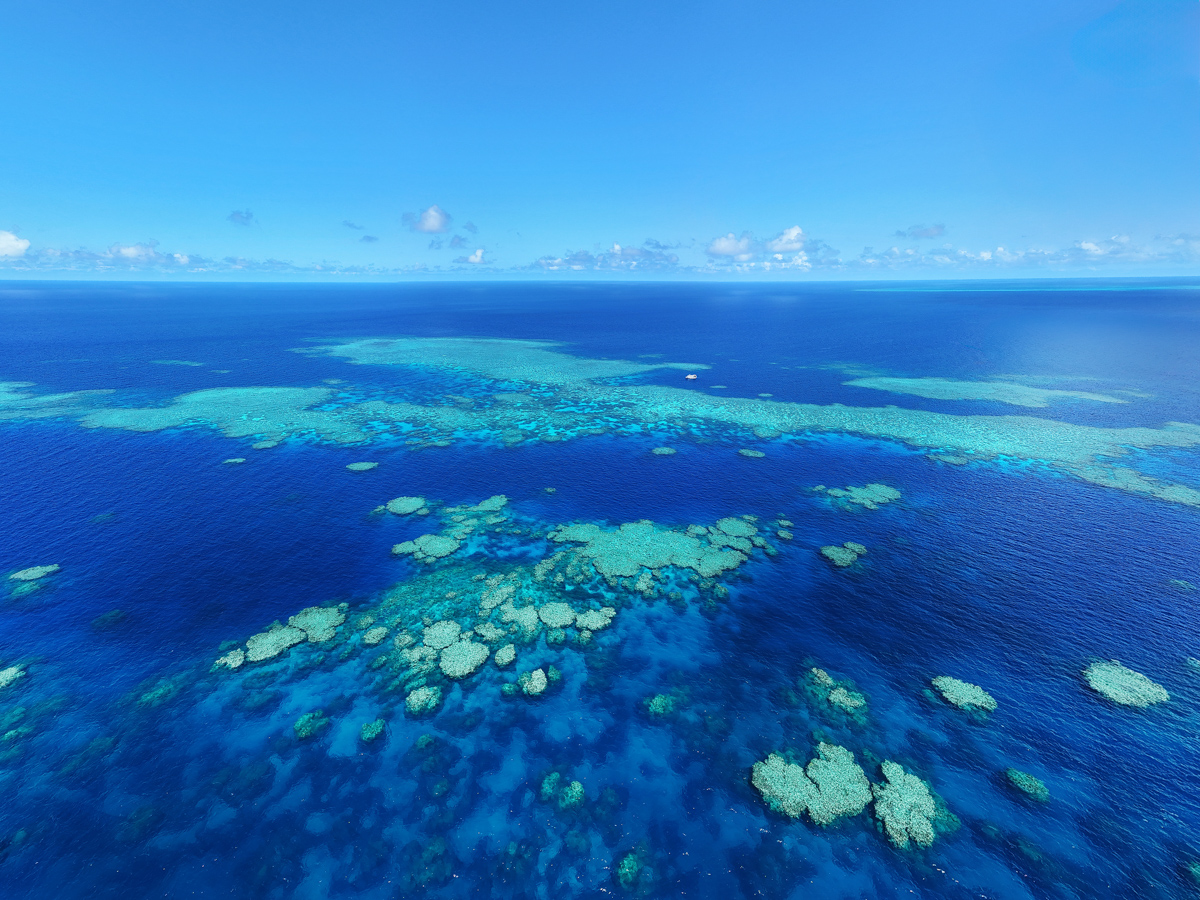
Dear members, supporters, and friends of the Coral Sea Foundation, welcome to the latest edition of Coral Sea News! We are excited to share some of the highlights of our marine conservation work over the second half of 2025, around the Great Barrier Reef and in Papua New Guinea in partnership with the Sea Women of Melanesia.

Sea Women of Melanesia awarded the Equator Prize 2025
We are honoured to announce that the Sea Women of Melanesia has been awarded the 2025 UNDP Equator Prize.
Selected from over 700 nominations from 103 countries, the Sea Women of Melanesia (SWoM) are one of just ten winners worldwide recognised this year for nature-based solutions led by Indigenous Peoples and local communities that address climate change while protecting biodiversity and strengthening community resilience.
Since its launch in 2002, the Equator Prize has honoured more than 300 community-led initiatives in 84 countries. This year’s theme — Nature for Climate Action, recognises youth and women-led efforts to restore ecosystems, build inclusive economies, and safeguard the planet for future generations.
The selection of the Sea Women of Melanesia as one of the 2025 winners highlights the increasing international recognition of the vital role that the SWoM are playing in marine conservation in Papua New Guinea.

National Geographic Pristine Seas PNG Documentary Solwara blo Yumi – Laif blo Yumi released.
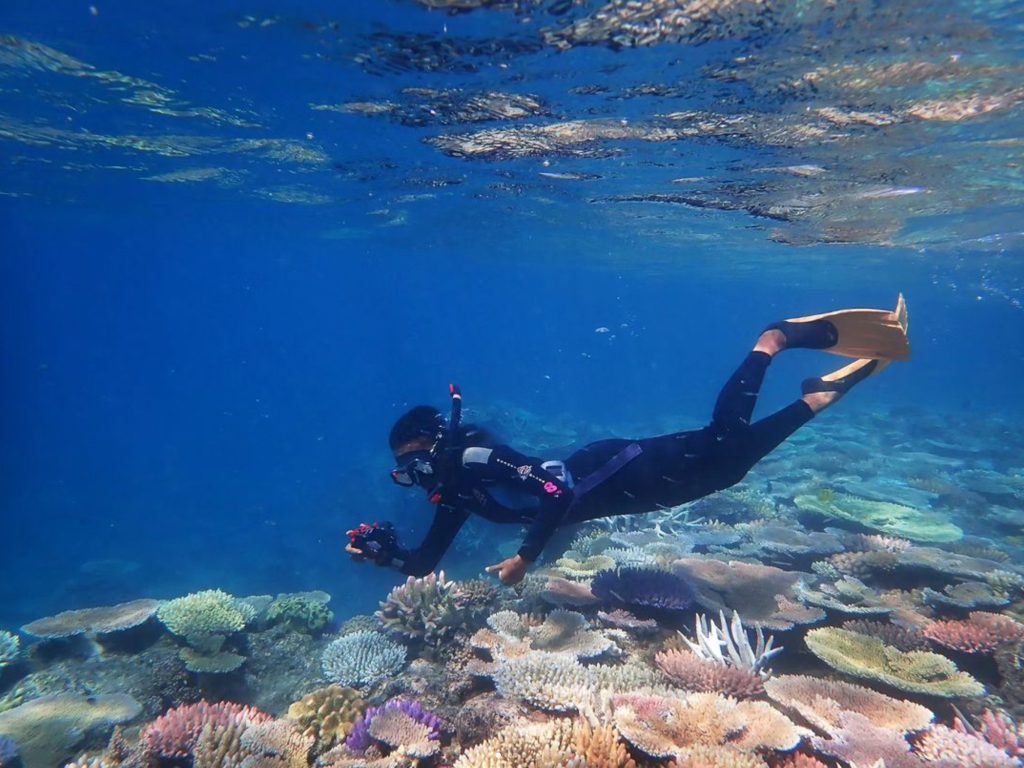
In September 2024, the National Geographic – Pristine Seas research vessel Argo completed a 5-week survey of the marine ecosystems of Manus and New Ireland Provinces in Papua New Guinea. Onboard was Sea Women of Melanesia Director Naomi Longa, a traditional owner of Harengan Island through her mother’s lineage. Naomi played an important role in the community liaison during the expedition, as well as collecting reef survey information as part of the shallow reef data collection team.
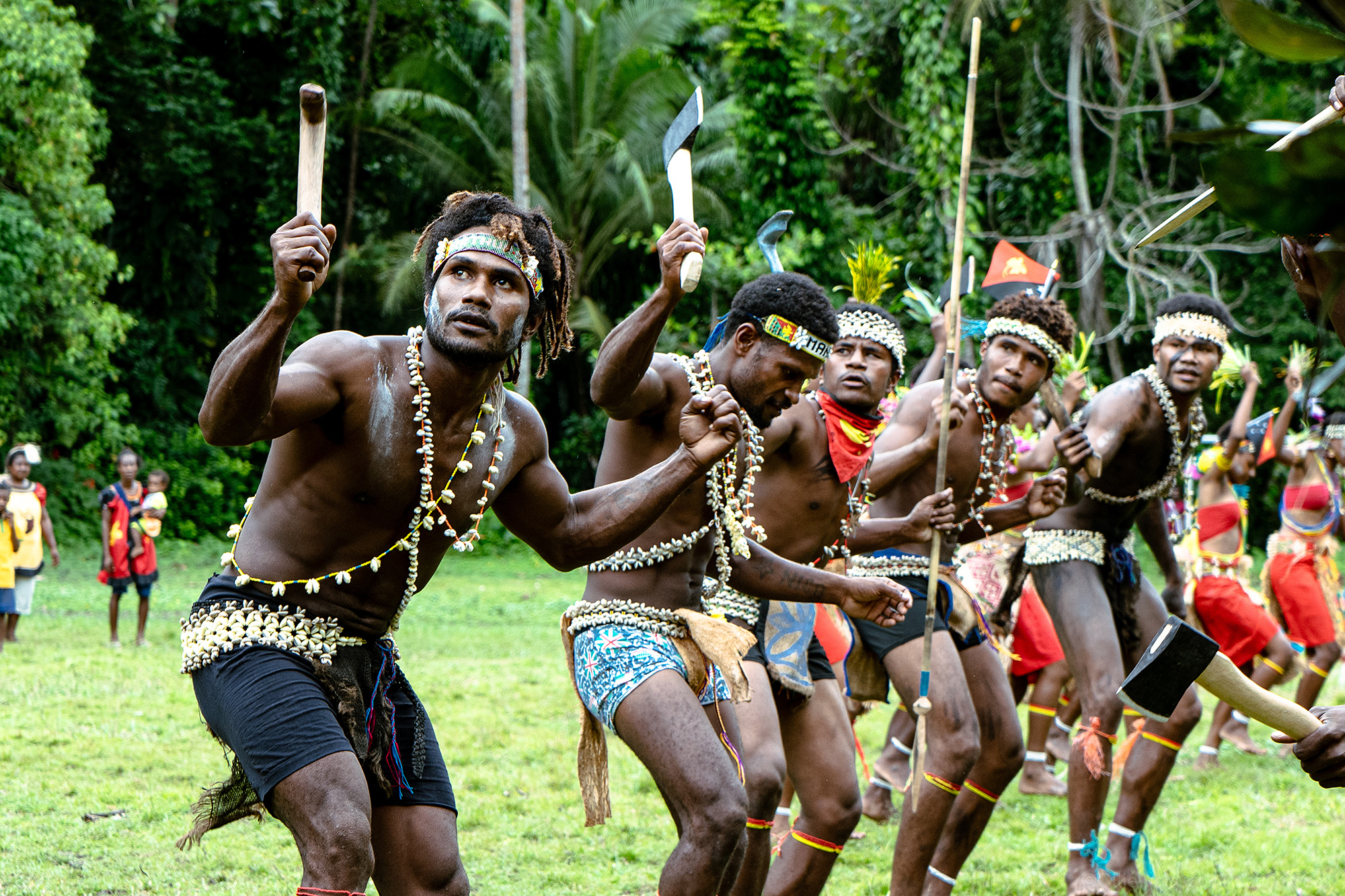
This newly released documentary film Solwara blo Yumi – Laif blo Yumi beautifully captures Naomi’s journey home and the stunning underwater world, islands, people and culture of the region. The results of this expedition revealed that the Western Islands of the Bismarck Sea contain tropical marine ecosystems of exceptional biodiversity, with global conservation significance. The documentary is an important contribution to the marine science and conservation knowledge of this area of the Coral Triangle in Papua New Guinea and has been shared widely with the PNG Government, Conservation Agencies, Regional Governments, and Traditional Owners.
Below is the full 73-minute film produced from expedition footage, reproduced here courtesy of the National Geographic Society. A shorter 10-minute version highlights the main science outcomes and conservation priorities.
The Sea Women of Melanesia were honoured to be part of the expedition’s planning and delivery. Thanks to ongoing support from National Geographic – Pristine Seas and new SWoM program partners: Tanka Foundation, Paul M. Angell Family Foundation, and Oceans 5. Sea Women of Melanesia will return to Manus and the Western Islands in 2026 to initiate and support community engagement and marine protected area development activities that were highlighted as so important in the Pristine Seas documentary.
Operations Update – Milne Bay Province
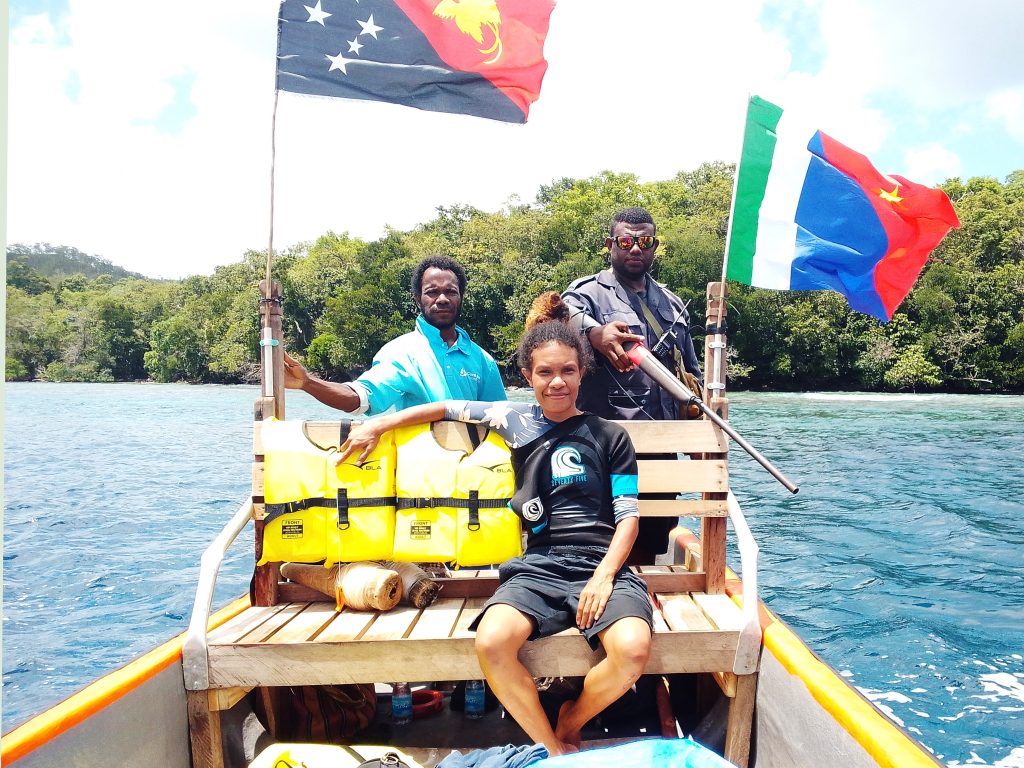
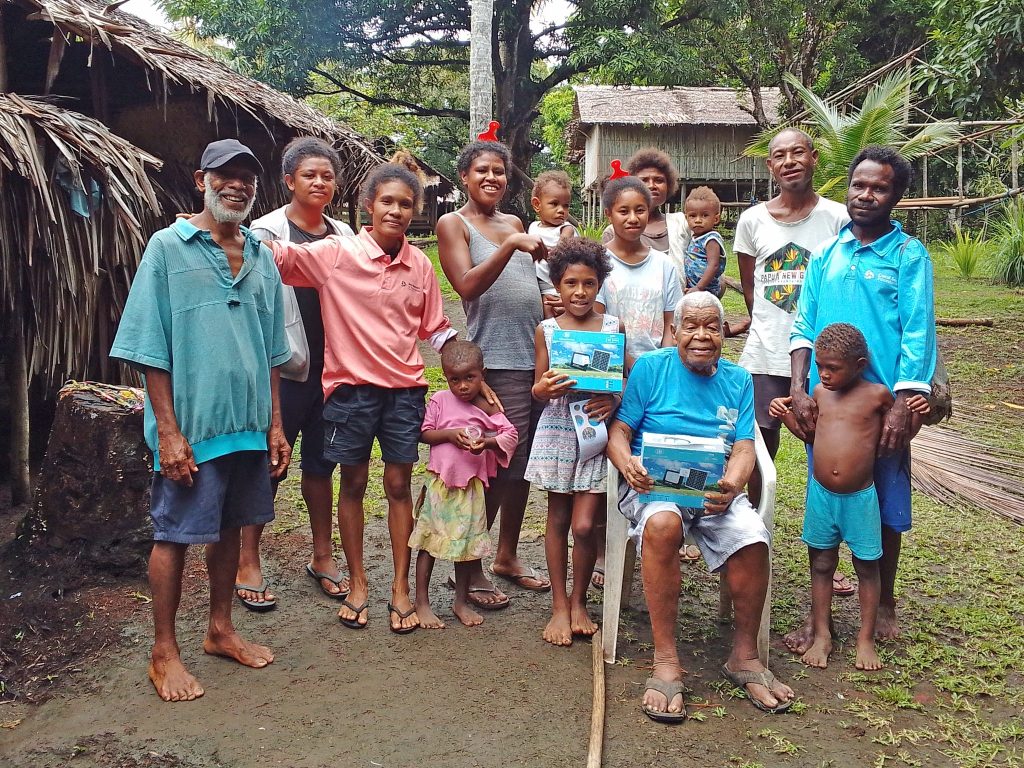
The Milne Bay Sea Women of Melanesia (SWoM) team continued their active program of marine conservation across the province in the second half of the year.
Operations Update – Central Province
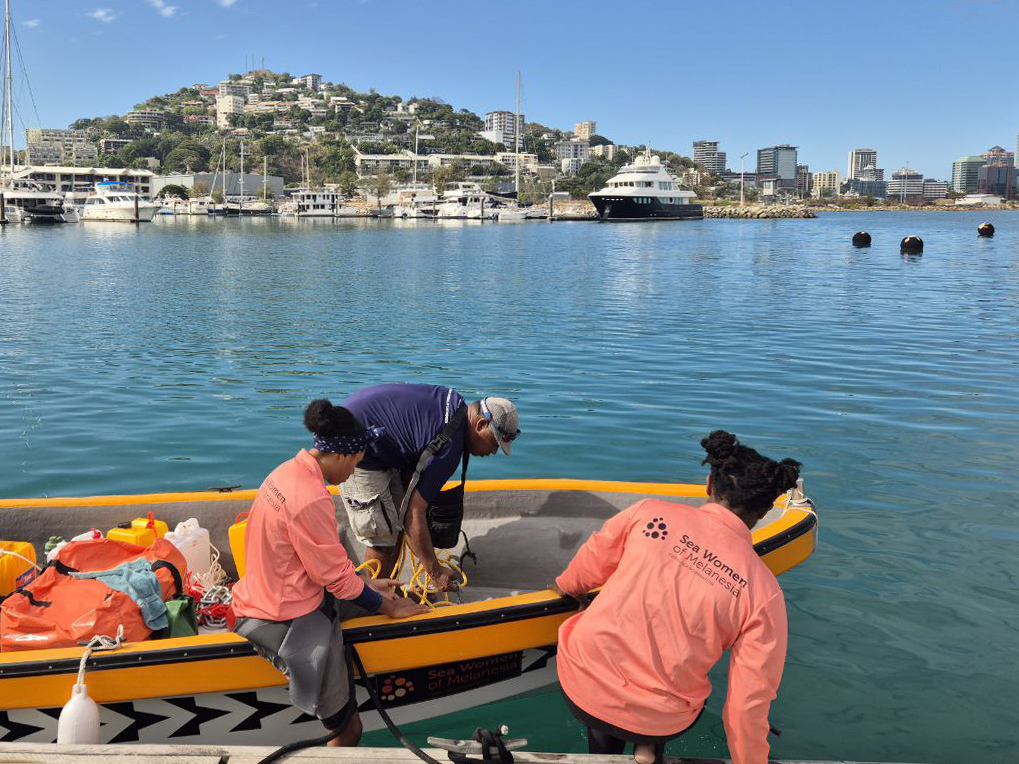
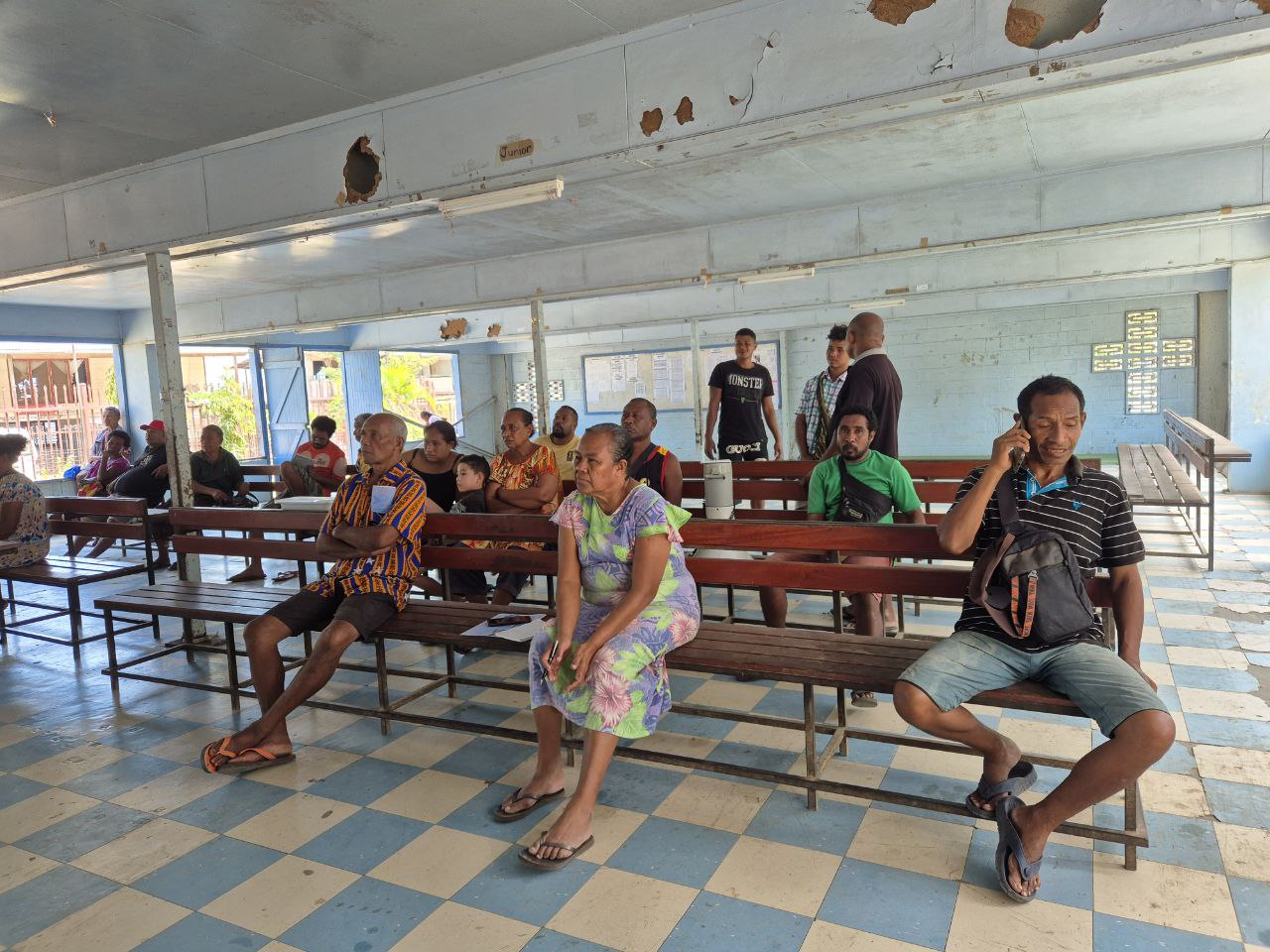
The Port Moresby Sea Women of Melanesia team has made remarkable progress in 2025, combining science, community engagement, and capacity-building to support marine conservation in Central Province.
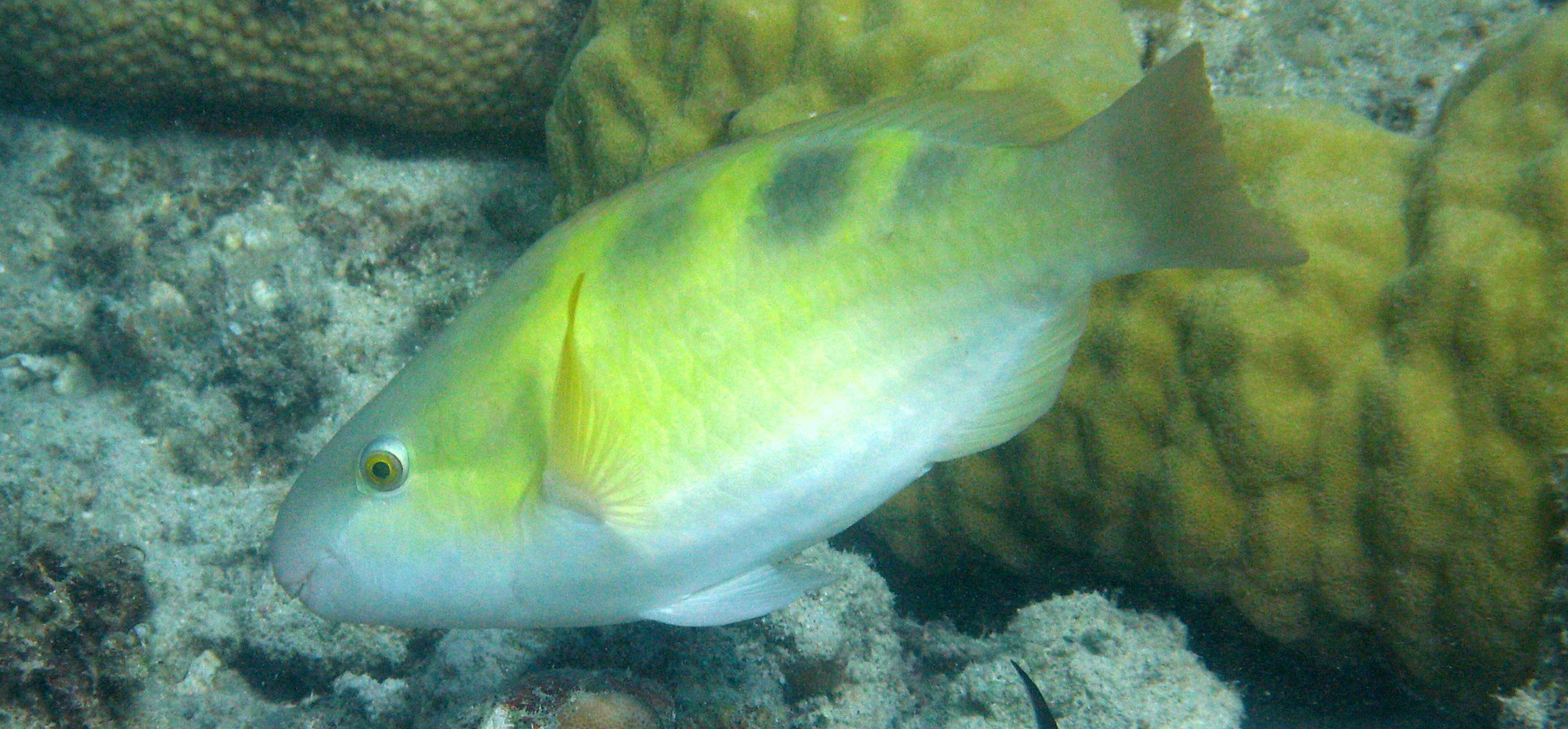
The women completed their fifth 2025 expedition to Tubusereia, establishing a baseline reef monitoring program for the proposed Tubusereia LMMA by laying nine GPS-marked transects across three sites (Kepo, Mumuna, and Neganega) and conducting fish surveys and reef imagery at each. Despite challenging visibility, the team recorded good coral cover and fish populations, building the skills and datasets needed for repeat monitoring and informed community management.
A follow-up LMMA awareness program with fishermen, women, youth, church leaders, and the Tubusereia LMMA committee strengthened local understanding of conservation, governance, and stewardship.
SWoM also worked in partnership with the Kyeema Foundation and the Pari Village Community to deliver a 3-day community awareness workshop on the benefits of a No Take Fishing Zone adjacent to the village, which will hopefully extend the network of LMMA’s within the Bootless Bay National Marine Sanctuary.
SWoM extends heartfelt thanks to the Tubusereia and Pari communities and our generous sponsors for their ongoing support, including the British High Commission Port Moresby, Steamships PNG, Sall Family Foundation, Swire Pacific Shipping, Tanka Foundation, and Kristin Lindblad.
Operations Update – Kimbe & West New Britain Province
The Kimbe Sea Women of Melanesia team completed several expeditions in the latter part of the year and added multiple new sites to our ReefCloud.Ai database, several of which had never been sampled before.
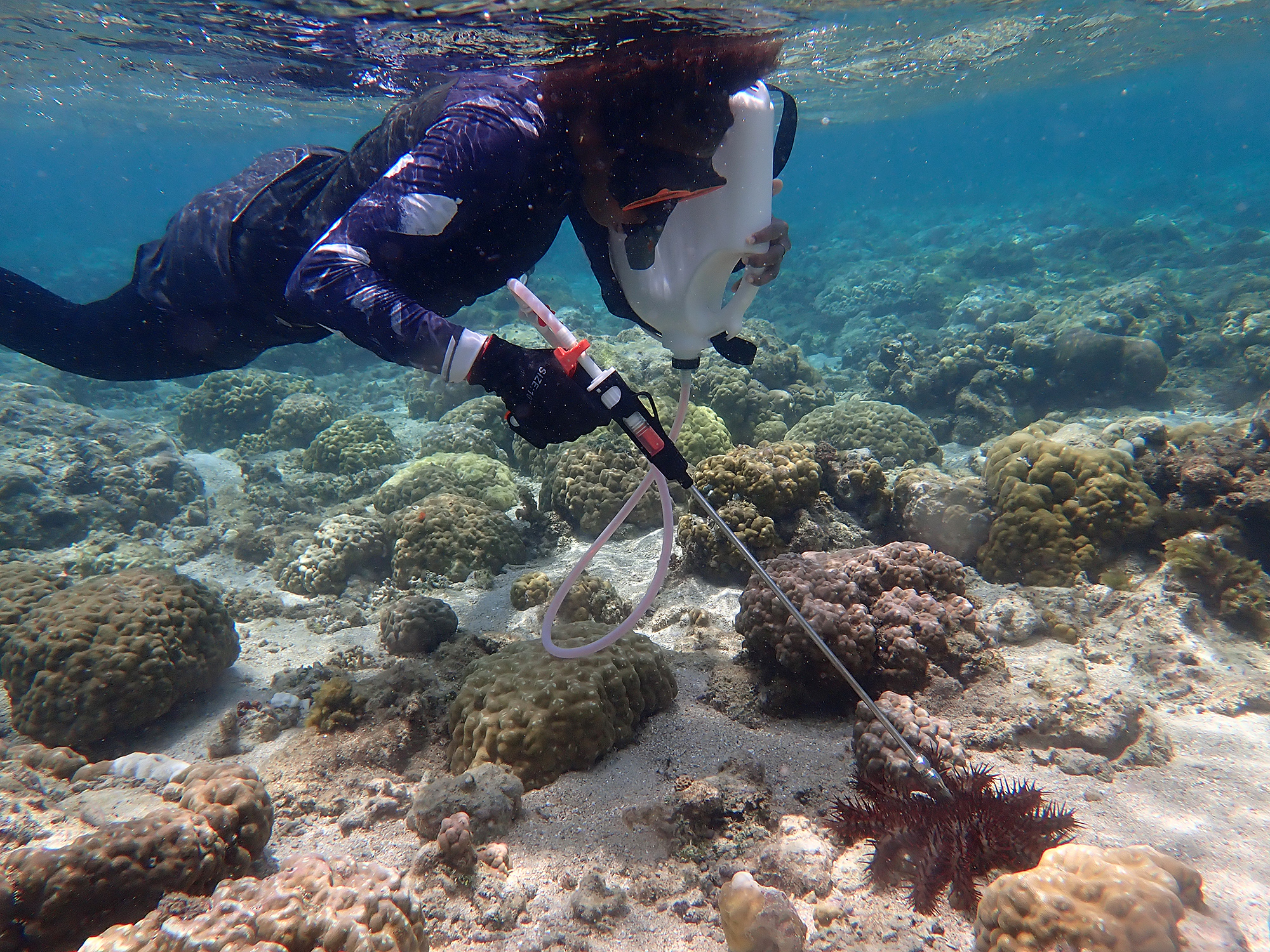
Monitoring sites at the proposed Vohi Reefs LMMA were re-surveyed before the team joined the Mahonia Na Dari team at Walindi Resort for scuba training and Crown of Thorns Sea Star (COTS) control. On this trip, the women culled 30 COTS and added new survey data from Emma’s Reef to our ReefCloud project, strengthening the scientific foundation for community-led reef management in Kimbe Bay.
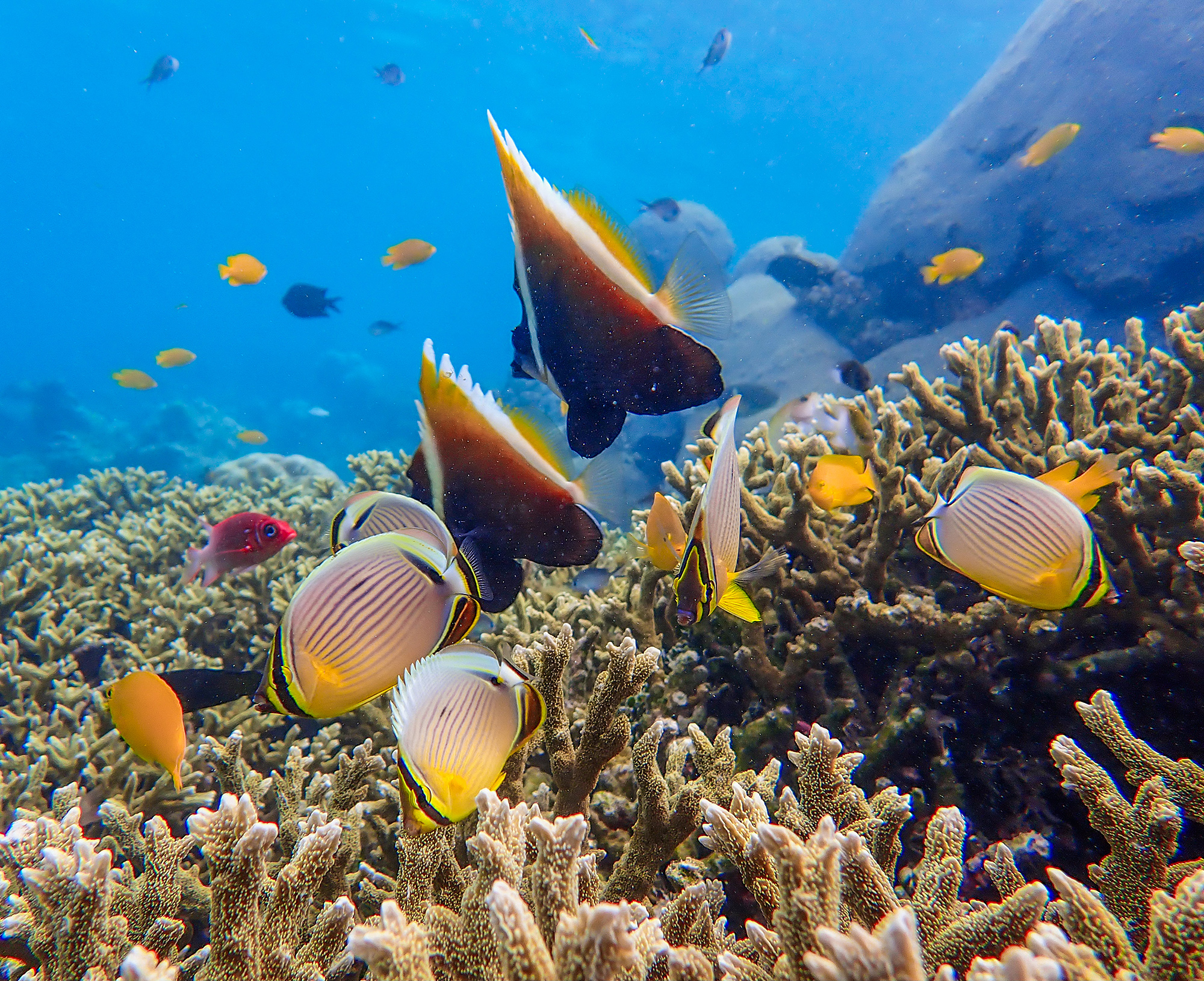
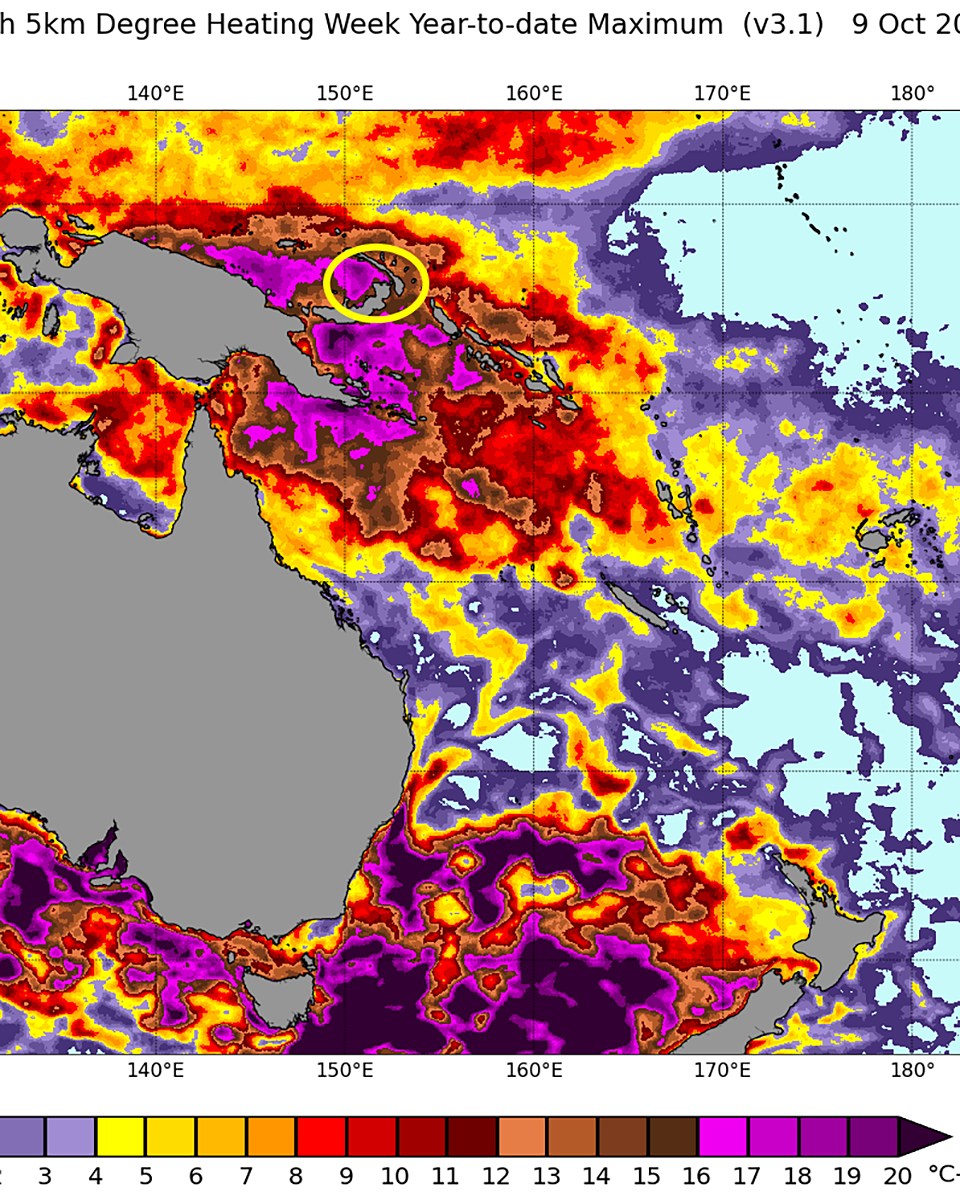
On a separate expedition to the Talele Islands, off the north tip of New Britain, the team documented a reef with outstanding coral cover despite recent satellite-based predictions of extreme heat stress. NOAA Coral Reef Watch data indicated 15–16 Degree Heating Weeks of thermal stress in this area, a level at which models suggest widespread bleaching and coral mortality should have already occurred.
Instead, the Sea Women recorded little to no visible bleaching, echoing similar findings from other Sea Women of Melanesia surveys in the Bismarck Sea and Milne Bay. These field observations suggest that for equatorial PNG reefs, the benchmark bleaching thresholds used in some global models may be set too low, highlighting the critical importance of real-time in-water monitoring to ground-truth predictions and guide management priorities.
The Kimbe SWoM team also returned to the Pelelua Reefs LMMA to continue COTS control and reef monitoring at a site that suffered a severe outbreak in 2023–24. Encouragingly, COTS numbers have now dropped dramatically, with only 15 of the coral predators culled during this expedition, while the women completed 12 surveys across seven reefs and collected more than 300 high-resolution geotagged images for analysis in ReefCloud.Ai.
Together, these expeditions showcase the vital role that Indigenous women are playing on the front lines of coral reef science and conservation in the Coral Triangle.
Many thanks to the Kimbe Sea Women of Melanesia team and the community leaders at Buluma, Mai, Morokea, and Ruango villages for their dedication to this work. The conservation efforts are being supported through partnerships with the Whitley Fund for Nature, the Sall Family Foundation, and Steamships PNG, demonstrating the collaborative approach needed for effective marine protection in this globally significant biodiversity region.
AIMS ReefCloud Community Dashboard Project
The Coral Sea Foundation and the Sea Women of Melanesia have partnered with the Australian Institute of Marine Science (AIMS) to support the development of the ReefCloud Community Dashboard, a digital platform that will assist local communities and management agencies in PNG to rapidly access information about the status of corals and fishes in the marine protected areas managed by our partner communities.
The ReefCloud system uses A.I. to analyse coral reef survey imagery with 80-90% accuracy and 700 times faster than traditional manual methods. The Sea Women of Melanesia teams have been at the forefront of using ReefCloud in PNG for several years, with data freely available on the public ReefCloud Dashboard here.
In the ReefCloud Community Dashboard project, the Sea Women of Melanesia will work closely with our Indigenous partner communities to fine-tune the dashboard to provide the most appropriate reef status information from their own Locally Managed Marine Areas, in a format that is relevant to the needs of the community and recognises the traditional ecological and customary knowledge linked to the marine life found on their reefs.
The project is underway with the Lelehudi community in Milne Bay and the Tubusereia community in Central province, and we will also liaise with two government marine management agencies to develop features suited to their objectives in PNG.
This collaboration supports the Sea Women of Melanesia’s mission to promote sustainable reef management through better data access. The platform ensures monitoring information reaches communities and organisations working in remote areas with limited resources, enabling smarter conservation decisions based on current, accurate data.
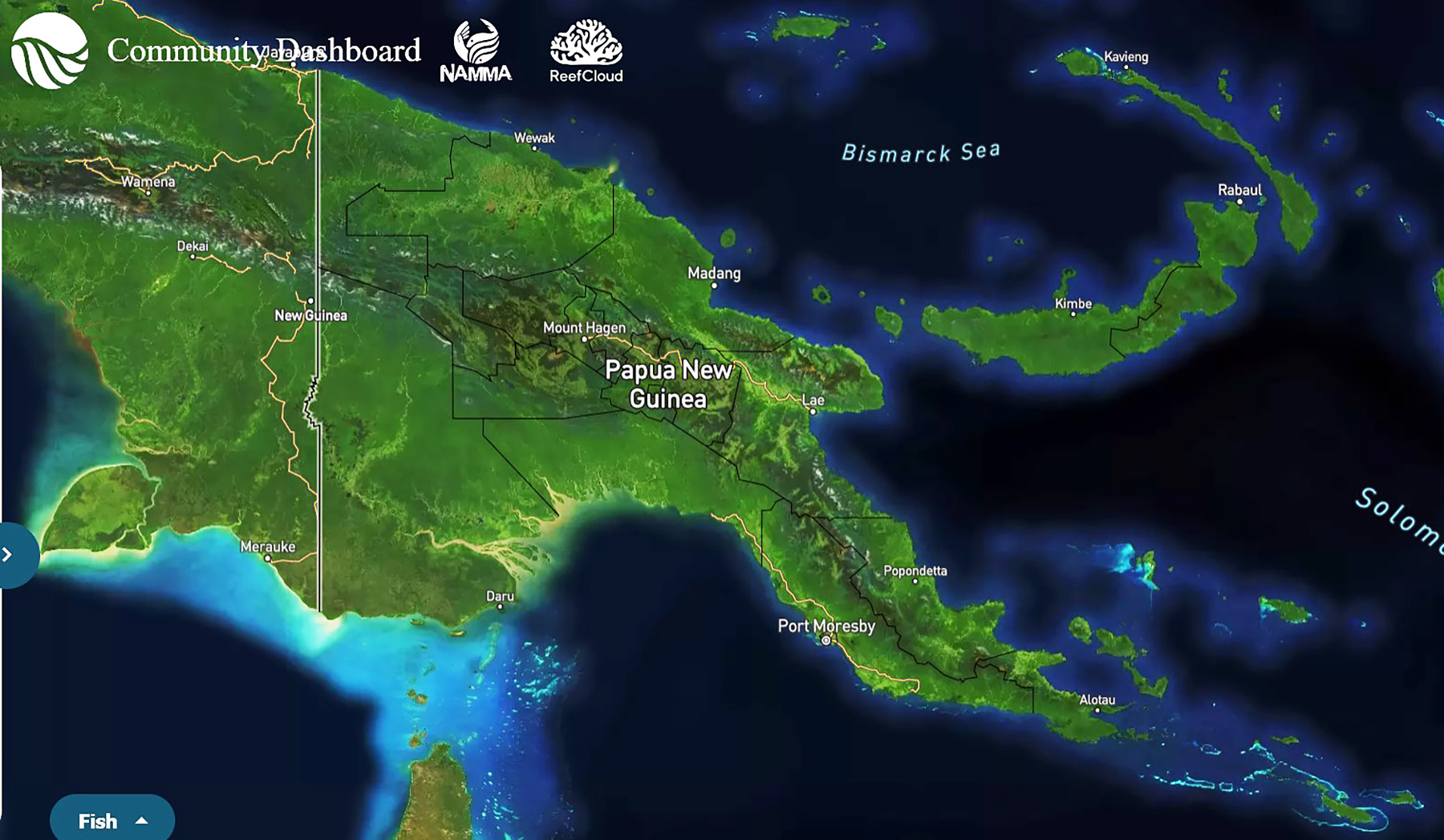

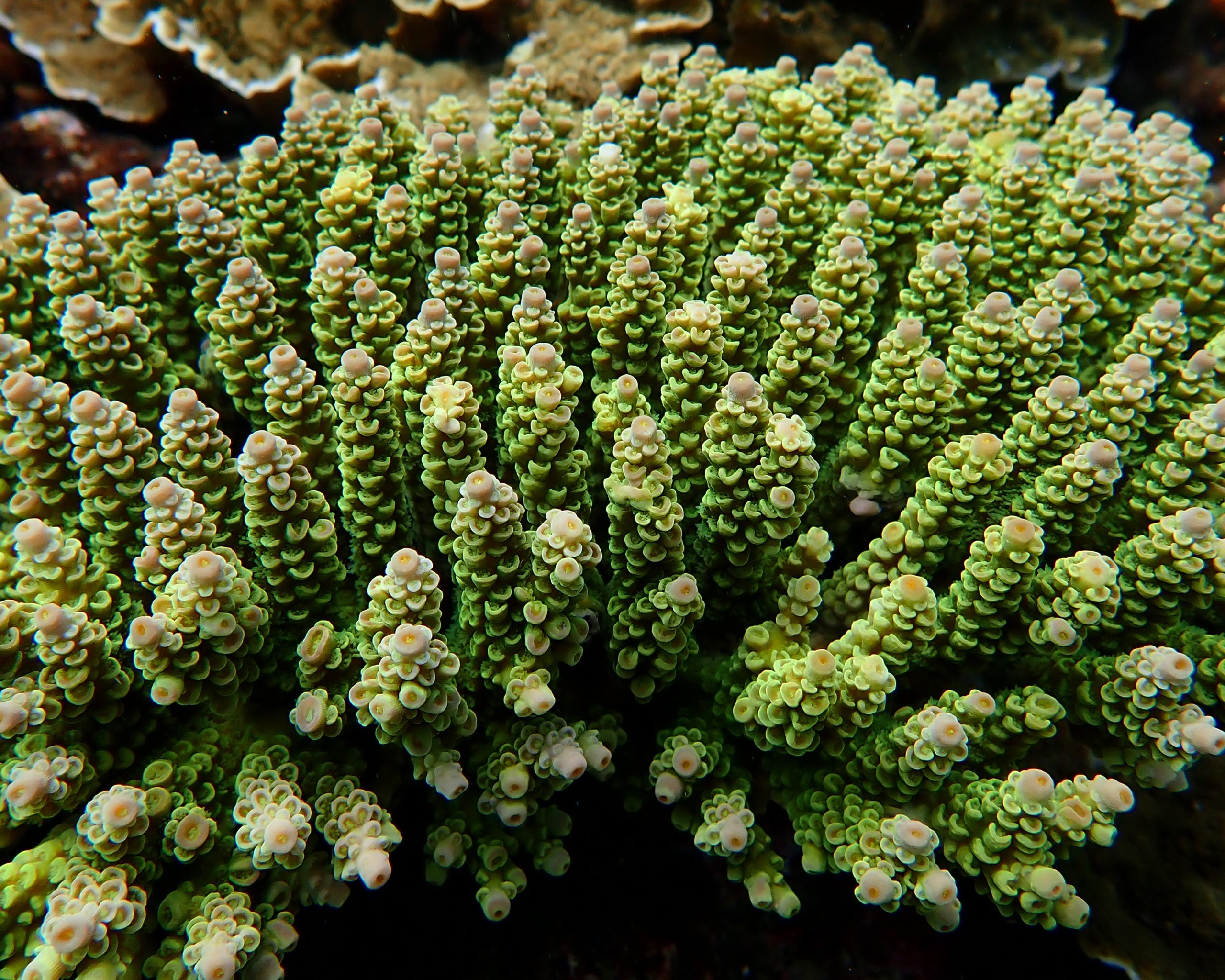
Check our PNG Survey Results on the ReefCloud Public Dashboard
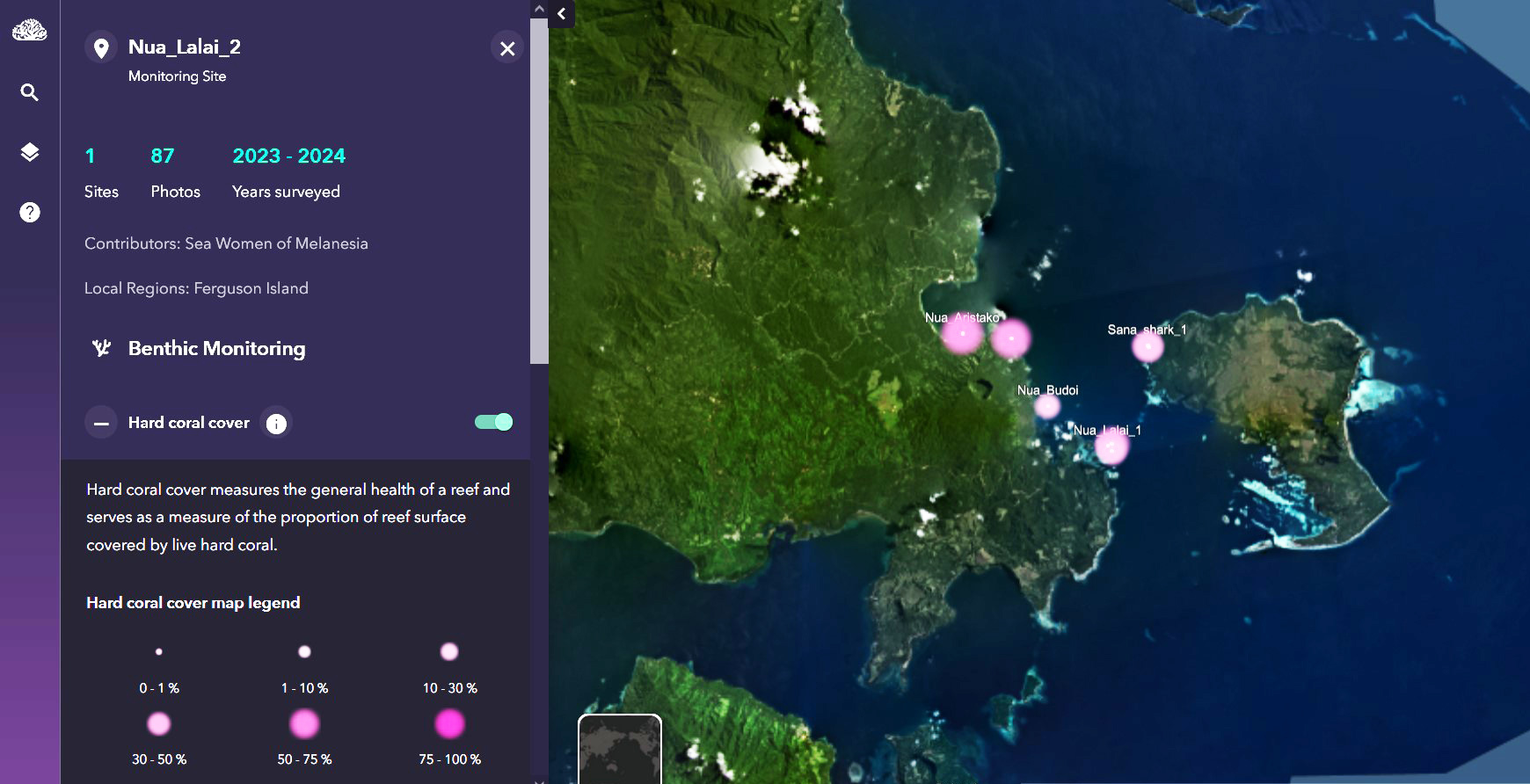
Our teams have been busy collecting reef survey imagery from around PNG over the last year, and summary results of those surveys are available to view on the AIMS ReefCloud Public Dashboard.
Zoom in on an area of interest and click the dot to see survey information for that site. Note in the left-hand menu bar, you can click Map Layers and toggle on/off the satellite imagery and reef geomorphic zones collected by the Allen Coral Atlas Project.
Sea Women International Networking
During 2025, Sea Women of Melanesia leaders took our message from the reefs of PNG to key regional and international forums.
In Bangkok, Milne Bay Team Leader Jacinta Jonathan represented SWoM at the Asia–Pacific workshop on accelerating the Kunming–Montreal Global Biodiversity Framework (KMGBF), alongside governments, UN agencies, and regional partners.
The workshop highlighted exactly where our work sits, at the intersection of biodiversity, food security, climate resilience, and community wellbeing, with Indigenous and community leadership, gender equity, youth inclusion, and stronger data sharing across the Pacific all flagged as essential.
Jacinta was able to share how SWoM teams are already putting KMGBF into practice on the water: partnering with coastal communities to establish LMMAs, laying permanent reef monitoring transects, and using image-based surveys to inform local management decisions.
At the same time, SWoM’s regional presence continued to grow. Gou Ava attended the Coral Triangle Initiative on Coral Reefs, Fisheries and Food Security (CTI-CFF) Women Leaders Forum (WLF) Regional Exchange in Honiara, Solomon Islands, contributing a PNG Indigenous women’s perspective to discussions on ocean governance and community-led conservation.
In Brisbane, Bianca Beri joined the ReefCloud Pacific Workshop, strengthening our technical capacity in digital reef monitoring and ensuring that PNG community data can feed directly into regional decision-making tools.
Together, these engagements show that Sea Women of Melanesia is working at the grassroots, but also helping shape the Pacific conversation on protecting reefs, supporting communities, and delivering on the Global Biodiversity Framework.
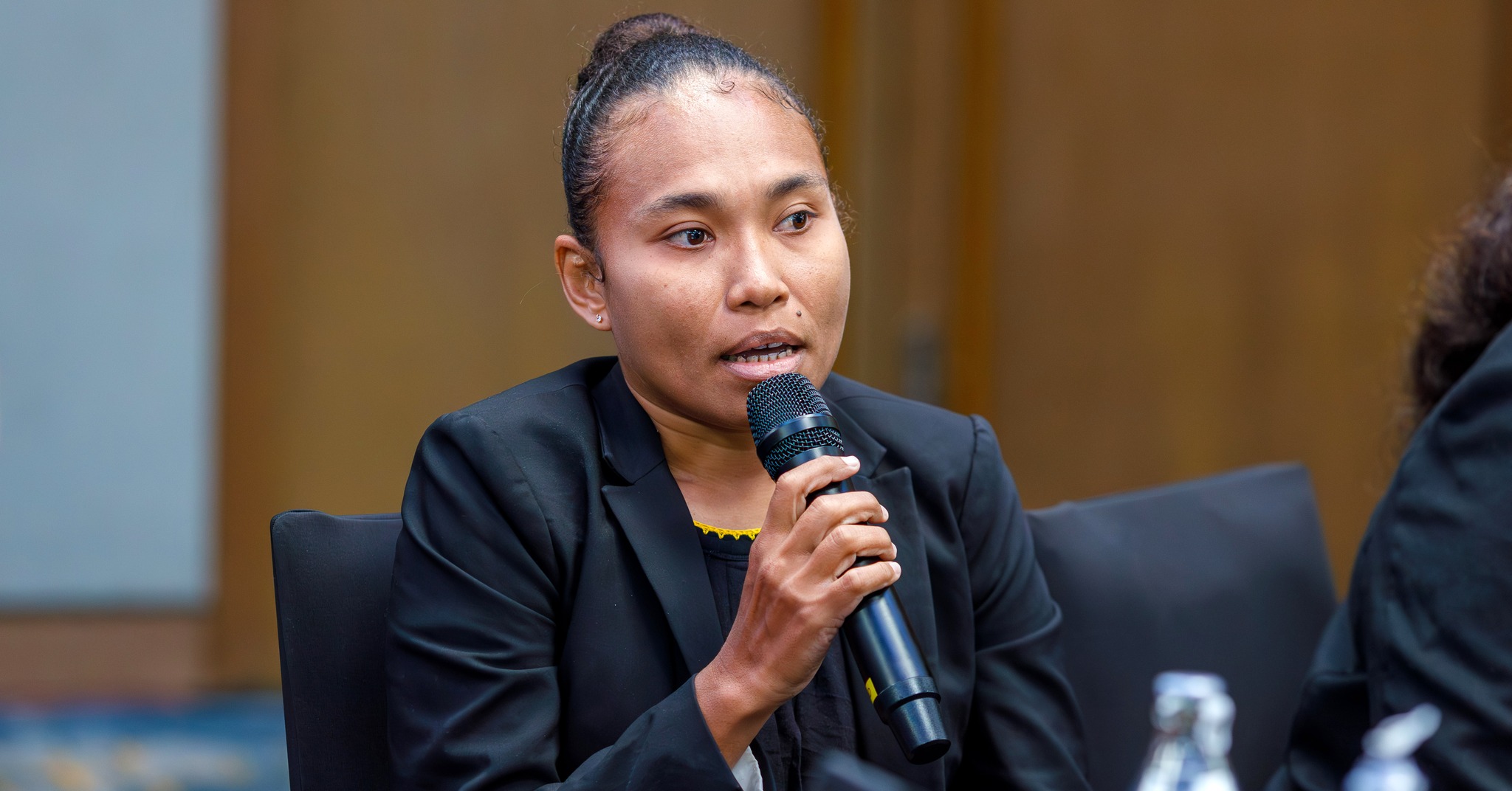
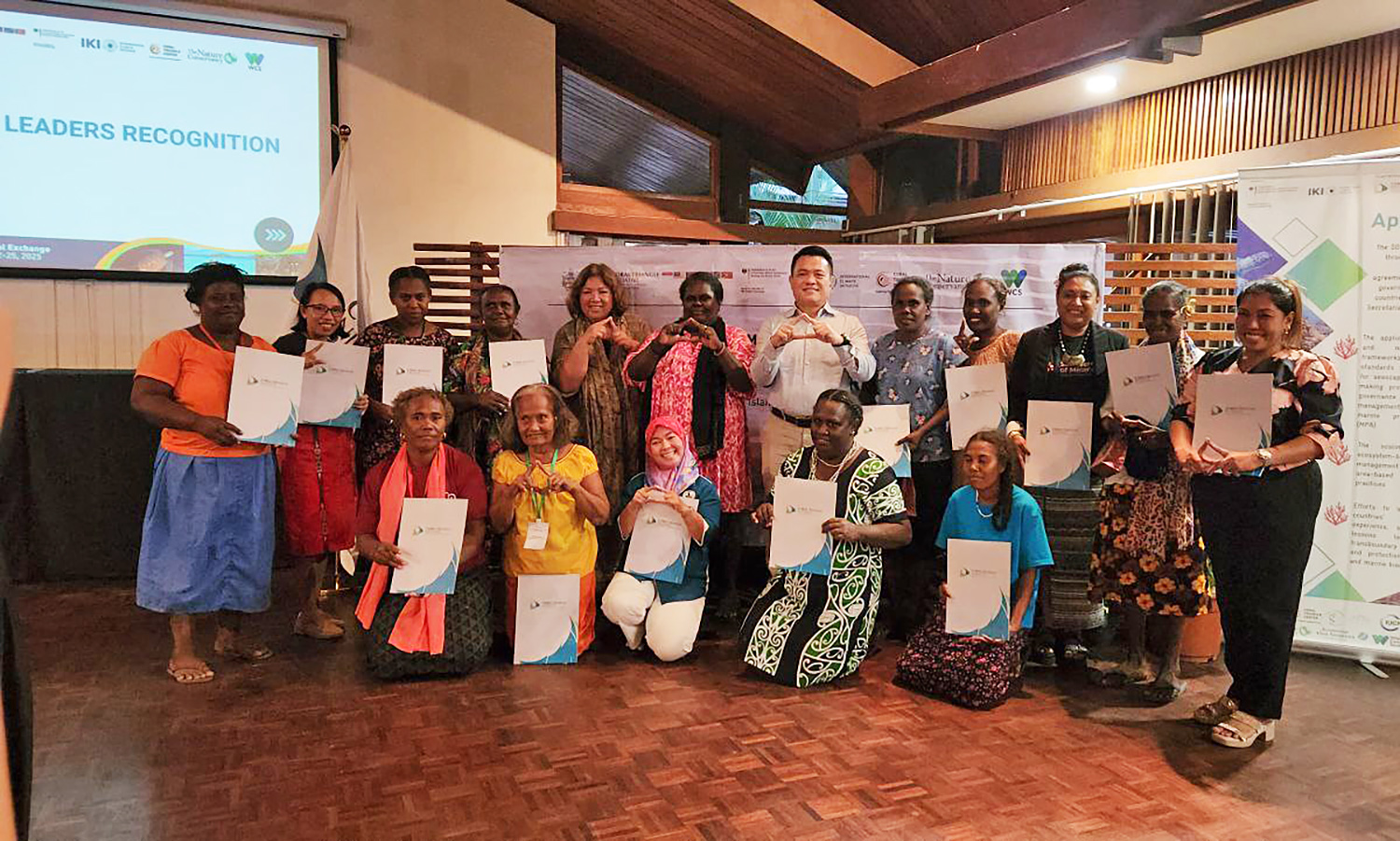
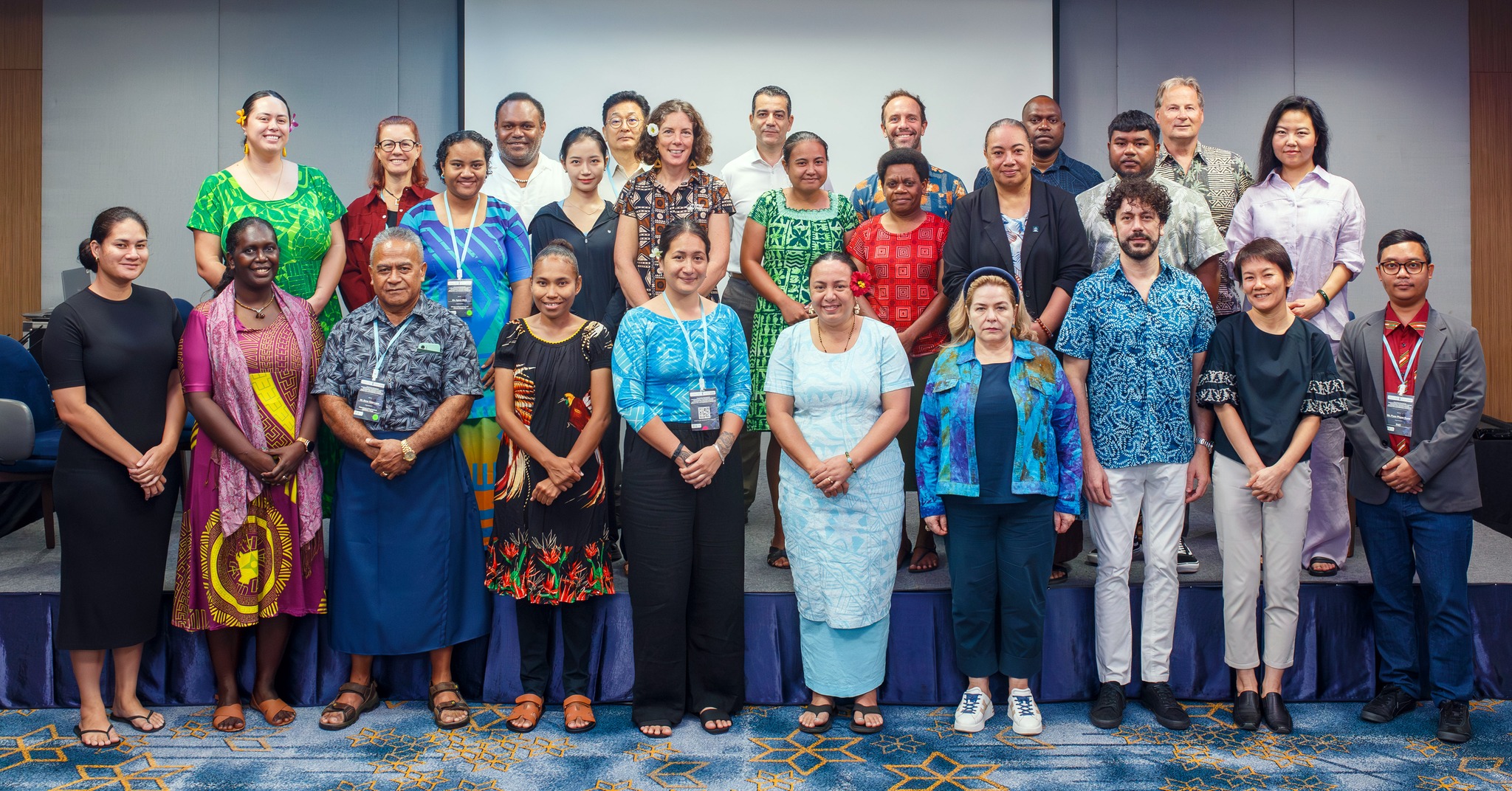
New Directors after AGM
After the Sea Women of Melanesia AGM on 5 November, we were proud to welcome two new Directors to the SWoM–PNG board: Abishag Maguapana from the Milne Bay team and Elizabeth Basho from the Port Moresby team.
Together, Abishag, Elizabeth and the (SWoM Team) bring deep community roots, technical expertise, and a shared commitment to women’s leadership in marine conservation, and we are delighted to have them guiding SWoM into its next chapter.
Gou Ava, leader of the Port Moresby team, remains as the third Director, and the entire SWoM team wishes to thank outgoing Director Naomi Longa for her service to the management of the organisation since its inception in 2021.
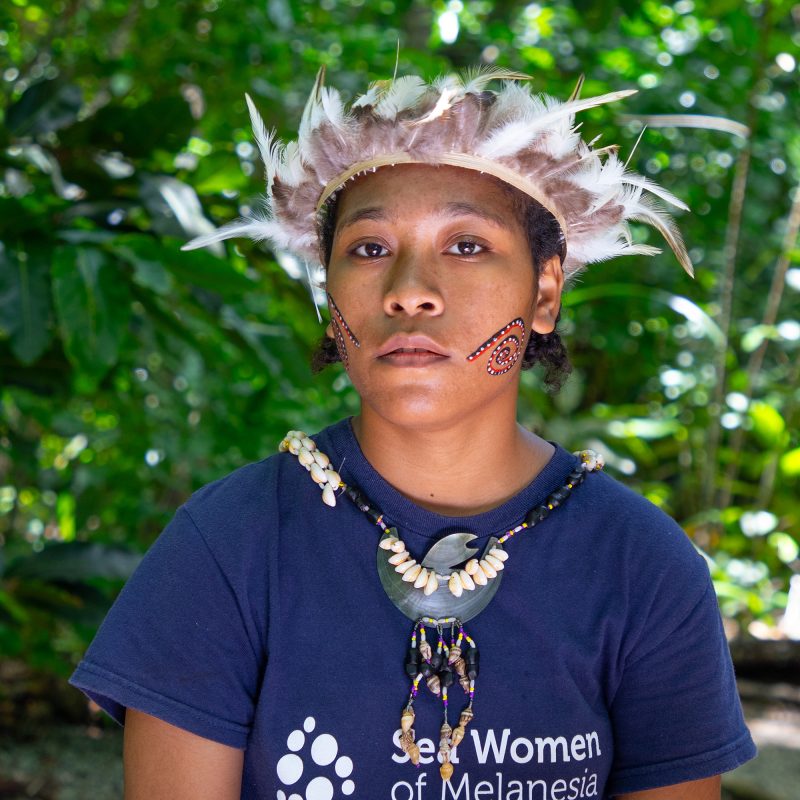
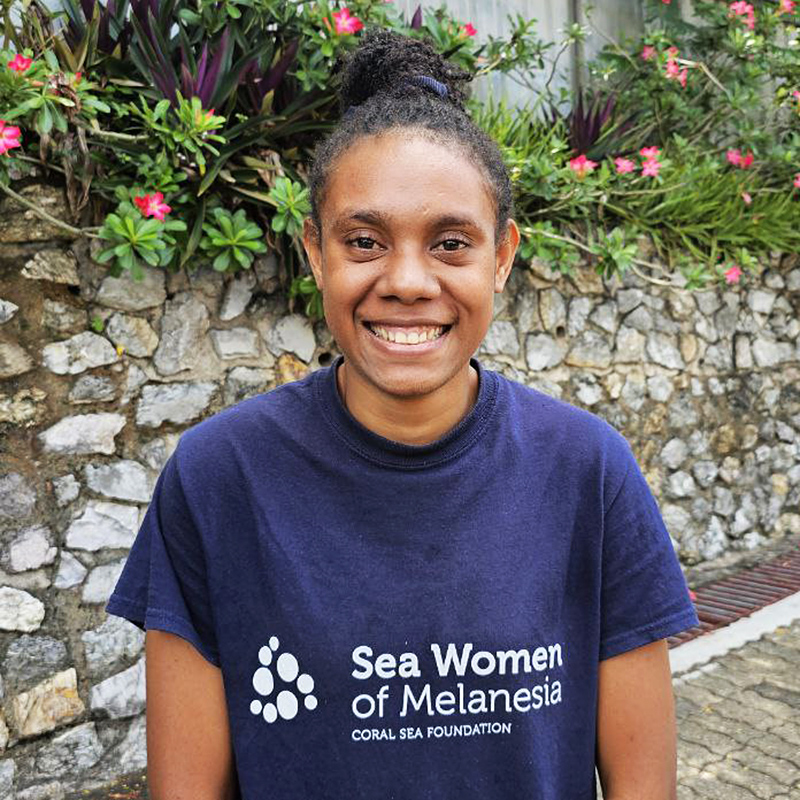
Abishag is from the village of Parimeta on the northern coast of Milne Bay, where her earliest memories of “marine management” were watching elders place traditional fishing tabu markers over the reefs.
Since joining SWoM she has overcome her fear of the ocean, become a confident diver and reef monitor, and emerged as a powerful advocate for grassroots education and sustainable use of clan sea country. (seawomen.net)
Elizabeth hails from Madang Province and holds a degree in fisheries science from the Papua New Guinea University of Natural Resources and Environment.
Based at the SWoM head office in Port Moresby, she combines her scientific training with day-to-day management of the organisation, helping to steer operations and support our expanding team of Indigenous women conservation leaders across PNG.
SWoM Leadership and Capacity Development Workshop 2025
In late November, Sea Women of Melanesia held a two-week Leadership and Capacity Building Workshop in Port Moresby, bringing together our Directors and Team Leaders from Kimbe, Milne Bay and Central Province, alongside Coral Sea Foundation Executive Director and marine science mentor Dr Andy Lewis and Sea Women Training Program Manager Naomi Longa.
The workshop was an important opportunity for our team to review our community engagement and marine conservation activities to date, identify gaps in our operational capacity, strengthen governance and budgeting skills, and plan for an expanded work program through 2026–27.
The team completed two days of advanced reef survey training at the Daromia Reefs and the Hiri Gade Barrier Reef, where they laid 50 m permanent transects, calibrated swimming speeds, collected geotagged coral imagery for analysis in ReefCloud.Ai, and conducted fish counts to support long-term LMMA monitoring.
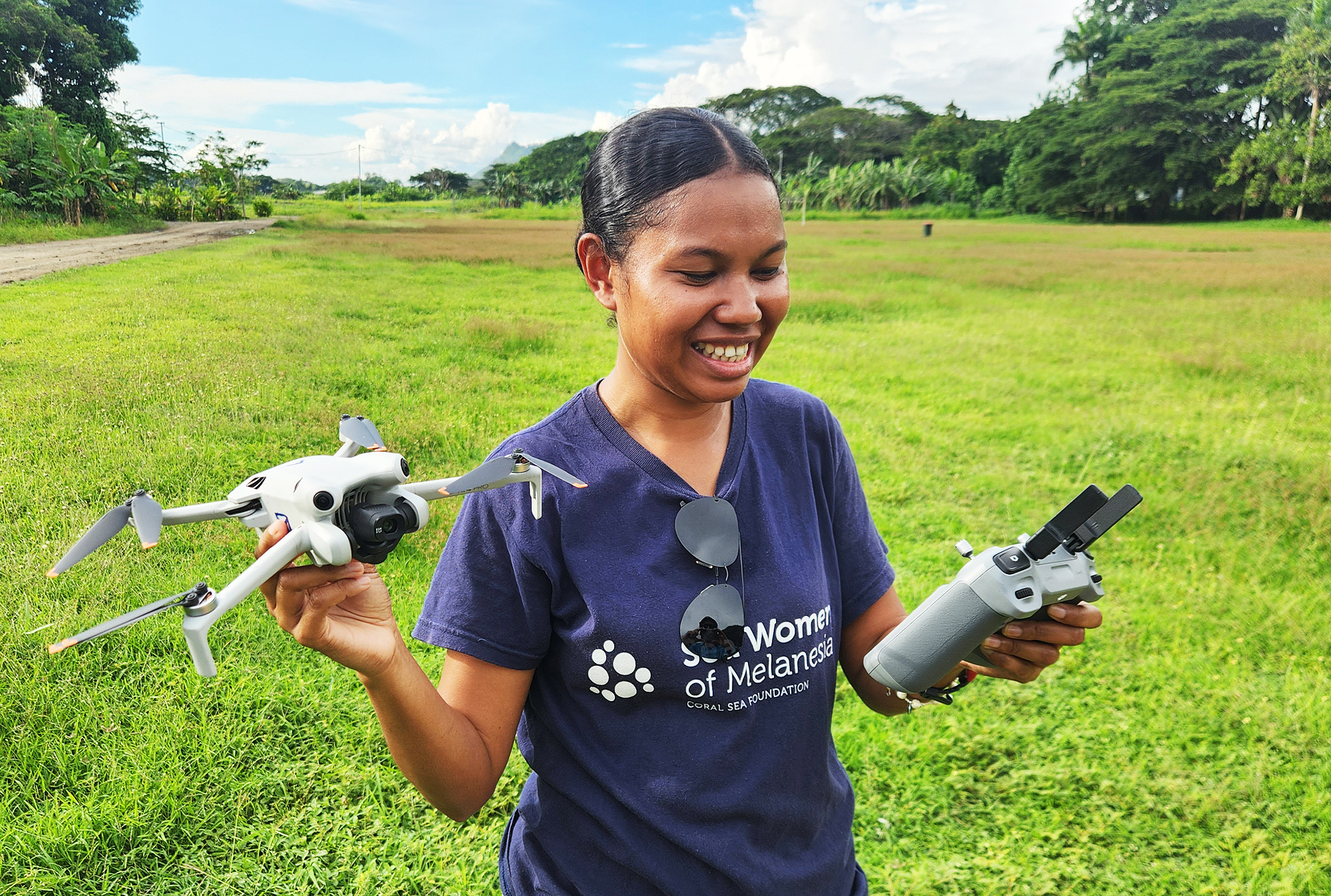
Field observations included both concern and hope: a noticeable loss of plate corals likely linked to recent bleaching stress, but also healthy coral stands and a memorable encounter with a juvenile hawksbill turtle. Thanks to our program partners, the team also received two new DJI Mini 4 Pro drones and spent a dedicated training day building flight skills so SWoM can capture high-quality aerial imagery and video to support LMMA planning and community reporting.
By the end of the workshop, the SWoM leaders had a clear strategic plan for 2026, stronger technical skills, and a renewed commitment to women’s leadership in marine conservation across Papua New Guinea.
We are blessed with a growing cadre of capable, hard-working Indigenous women who are ready to increase the tempo of our core mission: supporting communities to create and manage LMMAs that protect reefs and sustain livelihoods.
We warmly thank our partners for making this possible: Sall Family Foundation, Rumah Foundation, Kristin Lindblad, Paul M. Angell Family Foundation, Tanka Foundation, Coral Sea Foundation, and the Australian Institute of Marine Science.
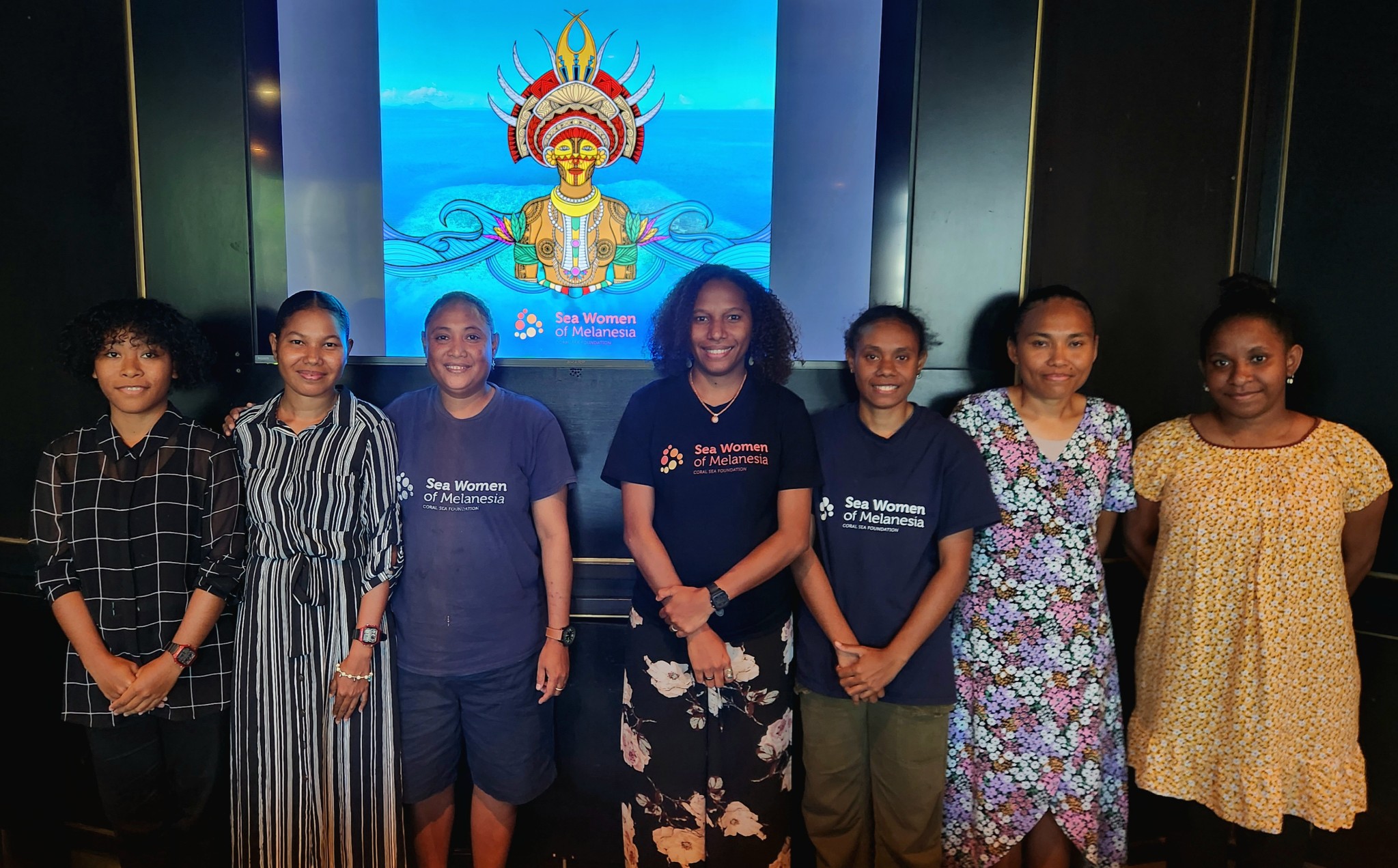
New Partners support 2026 SWoM Expedition Program
Sea Women of Melanesia is very pleased to welcome two new major partners whose support will transform the scale of our work in the coming years: the Tanka Foundation and the Paul M. Angell Family Foundation.
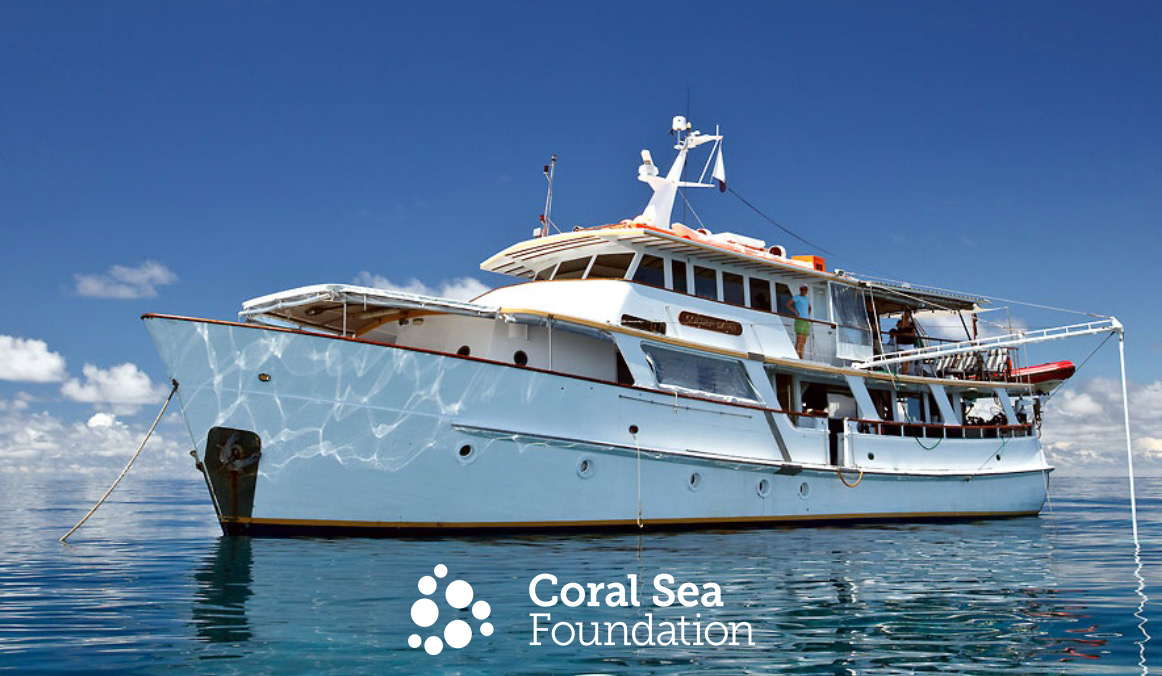
Both organisations have committed significant funding to expand the geographic reach of our marine conservation programs, with a particular focus on supporting the charter of a dedicated expedition vessel, the Golden Dawn. For an Indigenous women-led organisation working across a vast and remote seascape, reliable vessel access is not a luxury – it is the critical enabler of everything we do.
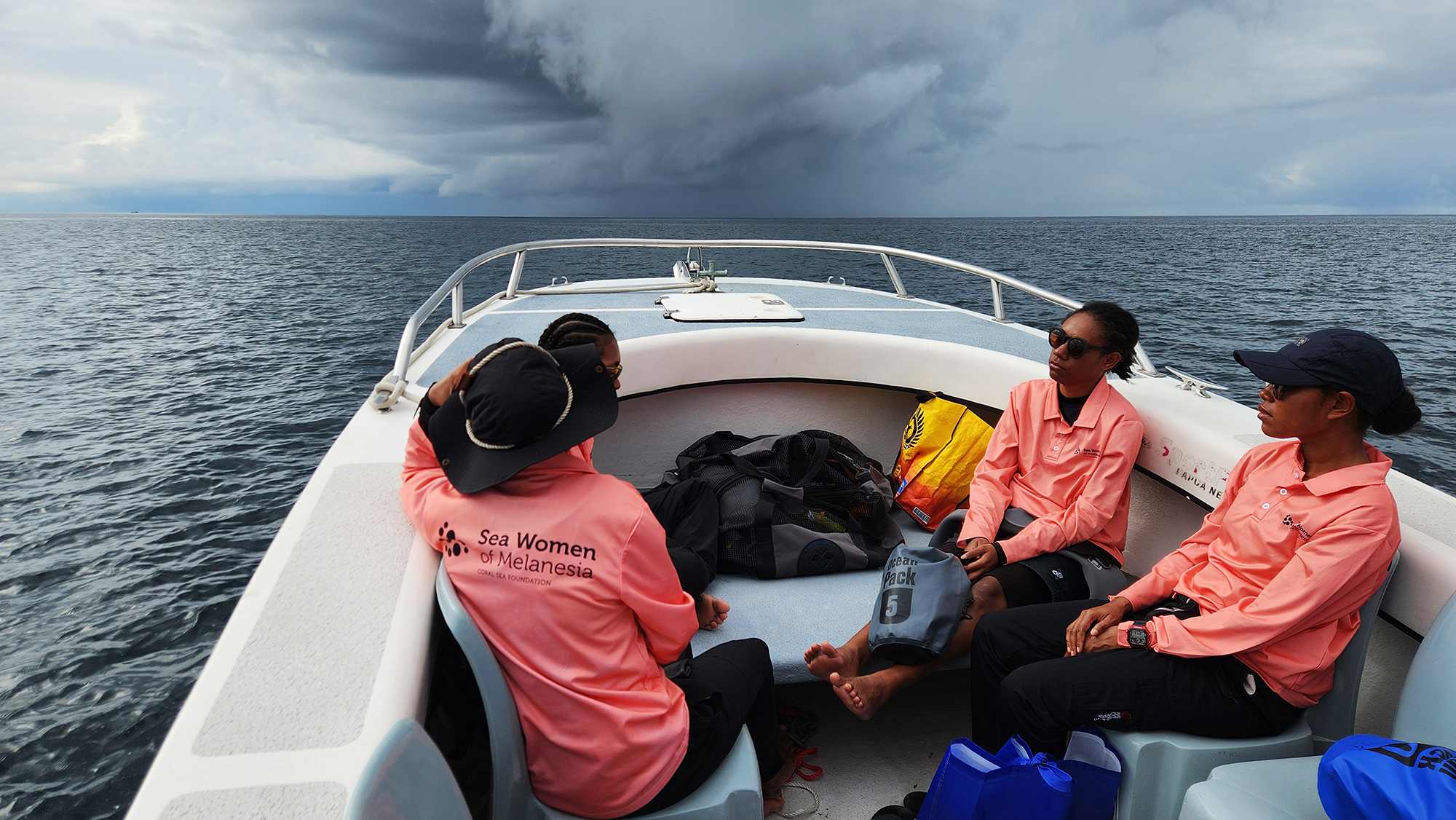
The Golden Dawn will allow our Port Moresby, Milne Bay, and Kimbe teams to travel safely and efficiently to our partner communities in the remote parts of the Coral Triangle that are difficult or impossible to reach in small boats. With an expedition platform capable of carrying divers, equipment, survey gear, and community aid supplies, SWoM can now perform more effective community engagement and marine conservation work across a greater area of PNG.
On each voyage, the SWoM teams will combine community engagement, LMMA planning, image-based reef surveys that feed into our ReefCloud.Ai project, and the delivery of humanitarian aid such as essential medicines, basic health supplies, and sustainable period pad products from our partners at Days for Girls Australia.
This new support directly addresses the main constraint we have faced to date: having the trained women, tools, and community partnerships in place, but not the vessel capacity to reach the most intact and vulnerable reefs of the Coral Triangle.
By underwriting expedition costs on the Golden Dawn, the Tanka Foundation and Paul M. Angell Family Foundation are enabling an important expansion in SWoM’s capability and impact. Their investment will help protect some of the highest-value reefs in Papua New Guinea, strengthen local leadership in remote communities, and ensure that Indigenous women remain at the forefront of cutting-edge marine science and conservation in one of the world’s great biodiversity hotspots.
We extend our heartfelt thanks to both foundations for their confidence in the Sea Women of Melanesia and for standing with us as we carry our work further into the blue.
Helping Country Outer Reef Expedition October 2025
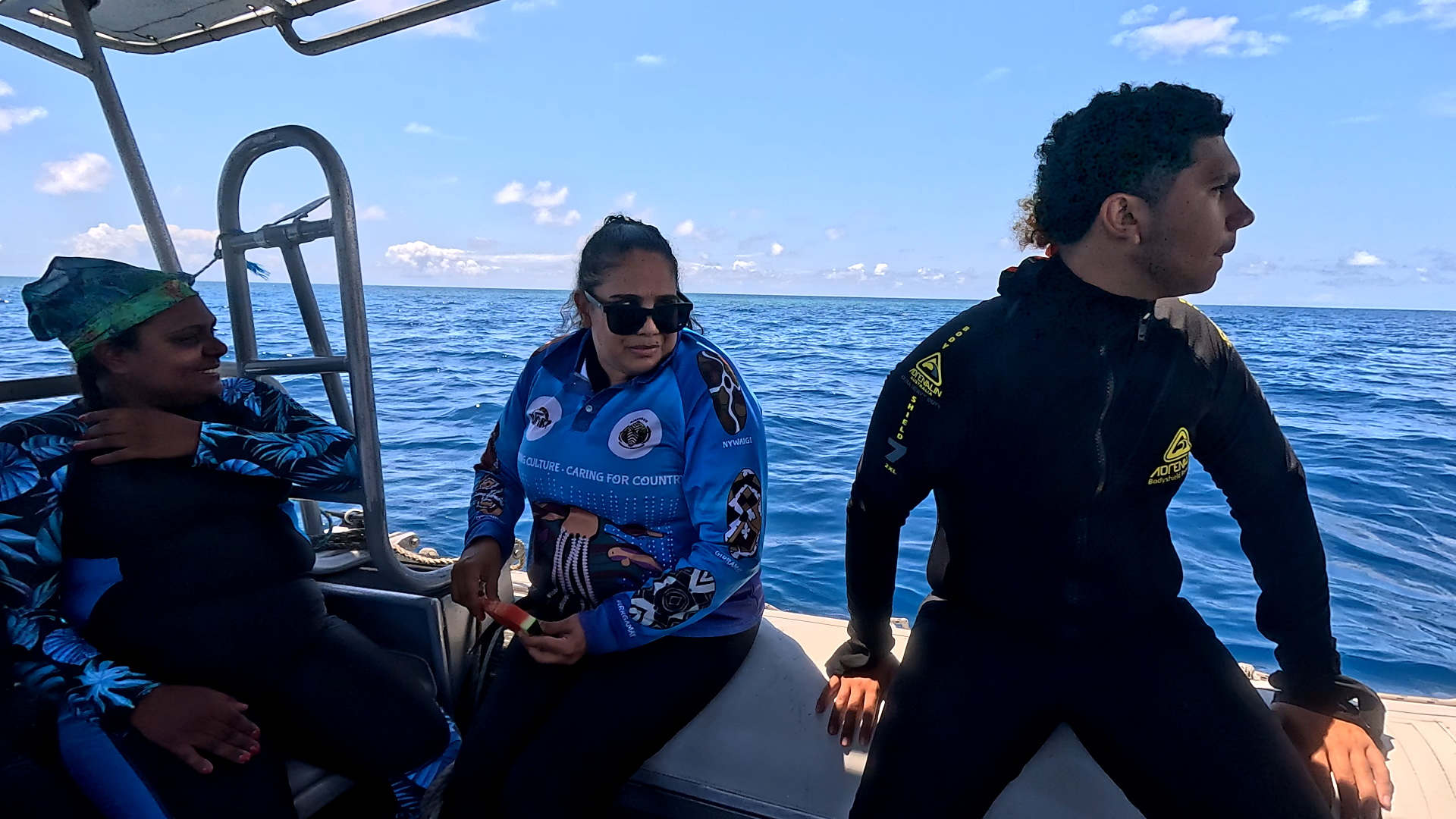
Thanks to the Helping Country grant from the Great Barrier Reef Foundation, we have spent the last eighteen months working alongside Indigenous people from the Wulgurukaba and Bwgcolman–Palm Island groups, building the practical skills and confidence needed to undertake marine conservation work on their own sea country.
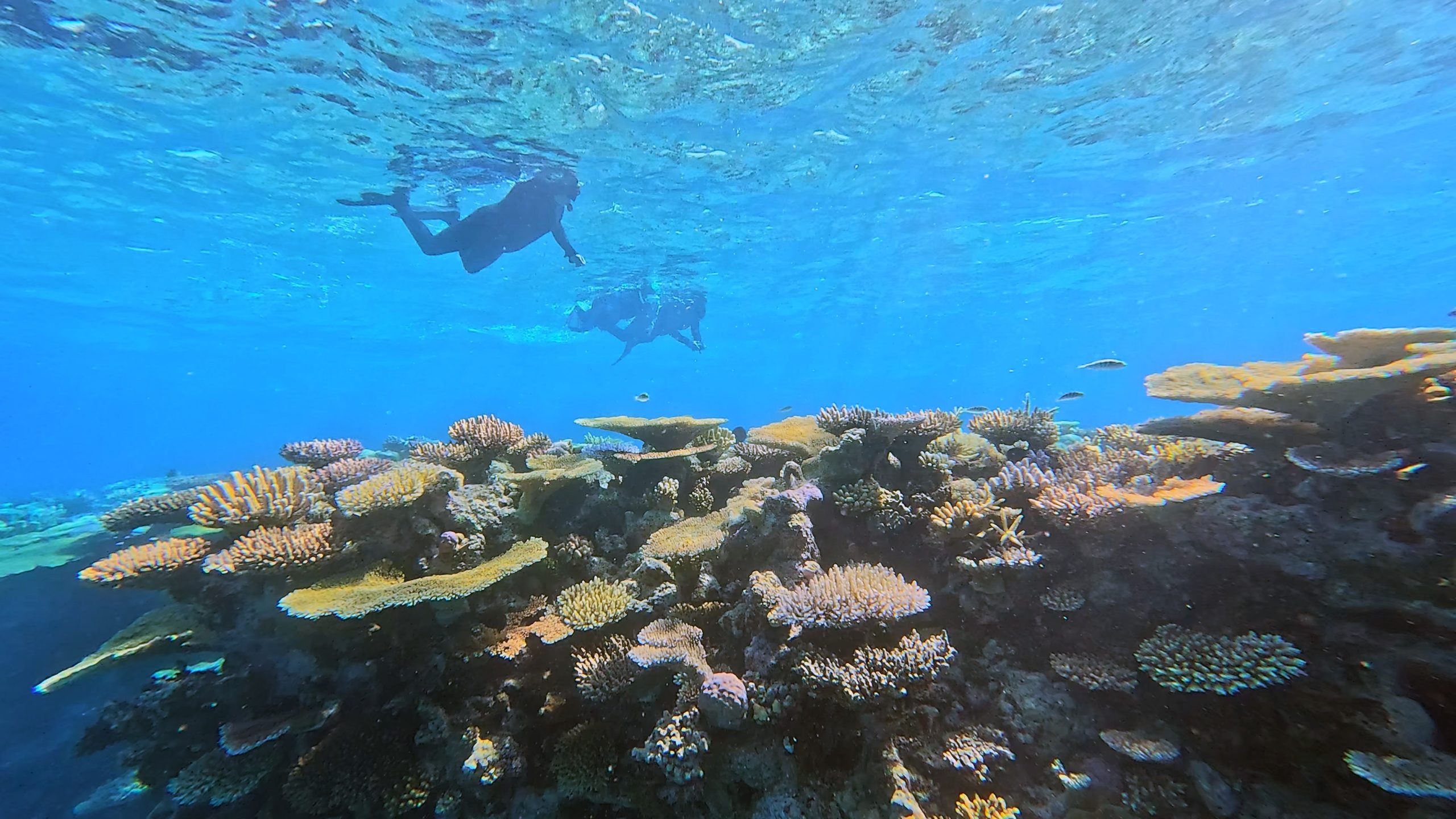
Through a series of field trips and training exercises, our trainees have learned snorkelling and free diving, GPS navigation, fish and coral identification, and photographic reef survey methods, and many have now obtained their QLD Marine Licence. Just as importantly, they have had the chance to be out on the water regularly, to strengthen their personal connection with the reefs and marine life of their traditional sea country.
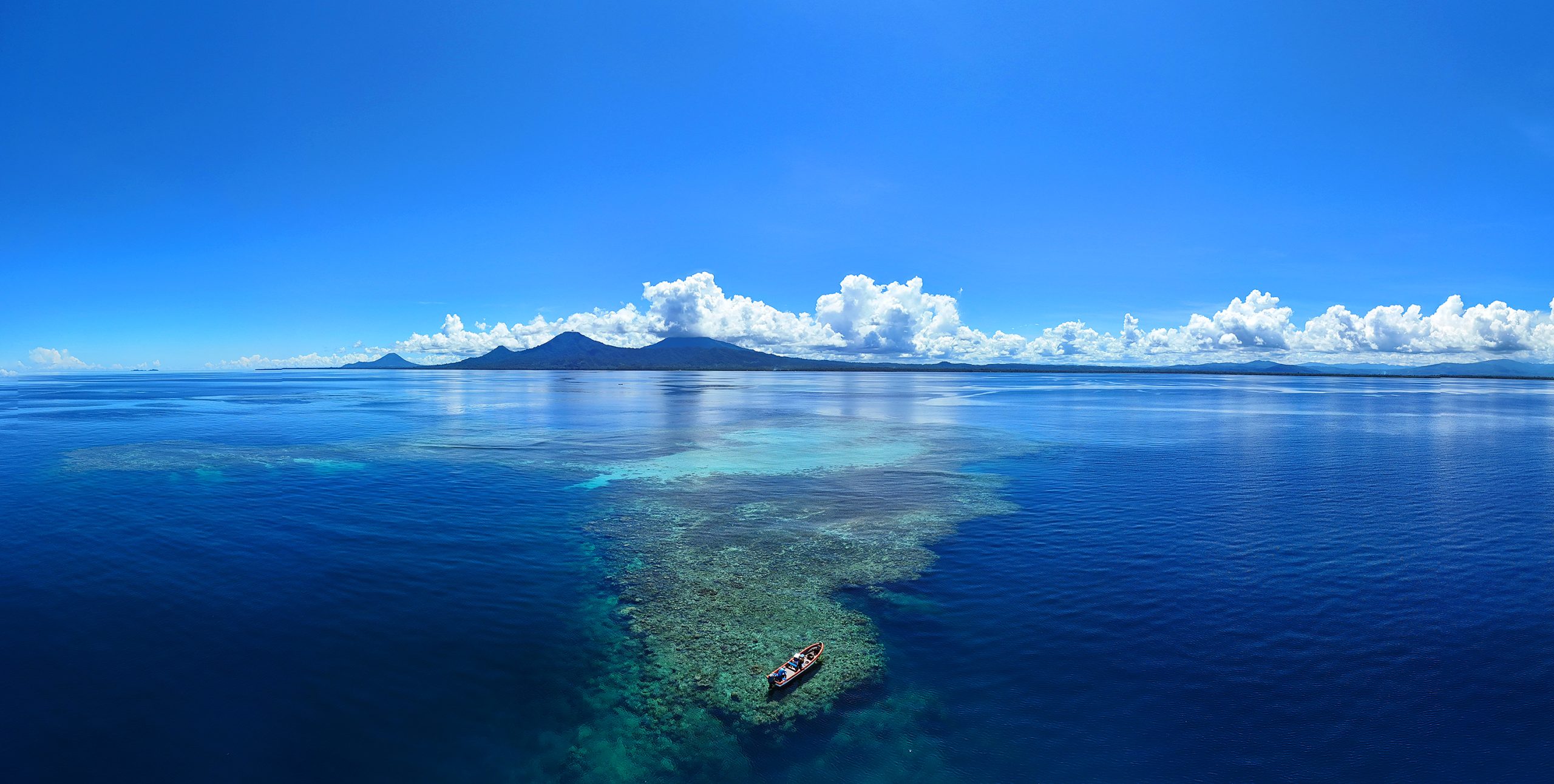
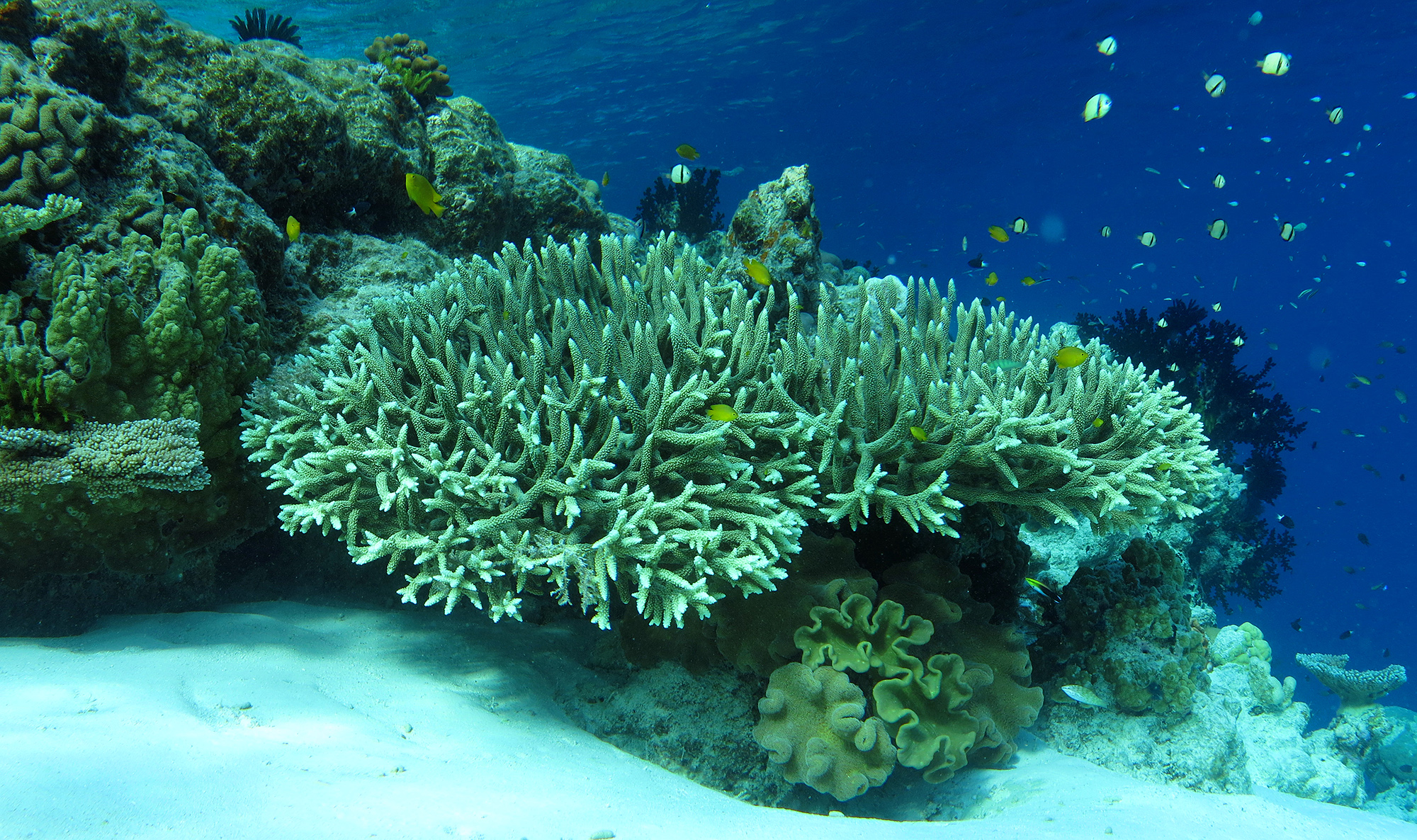
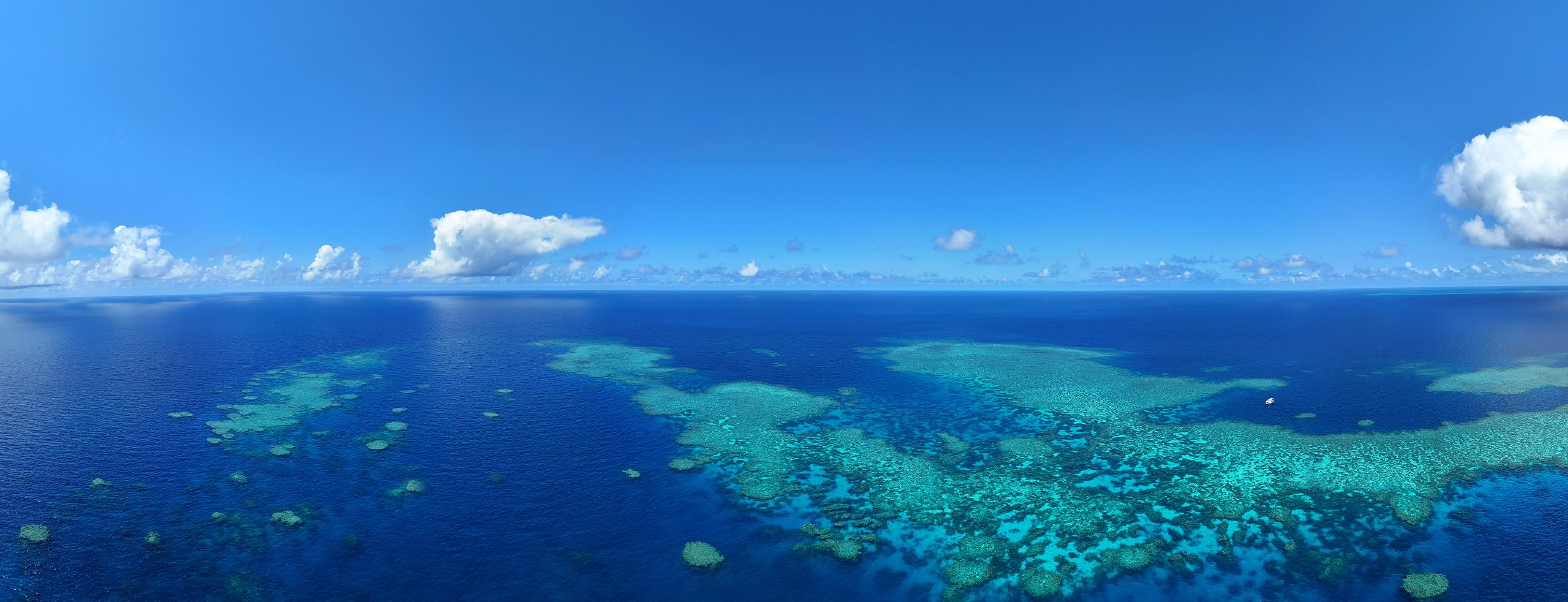
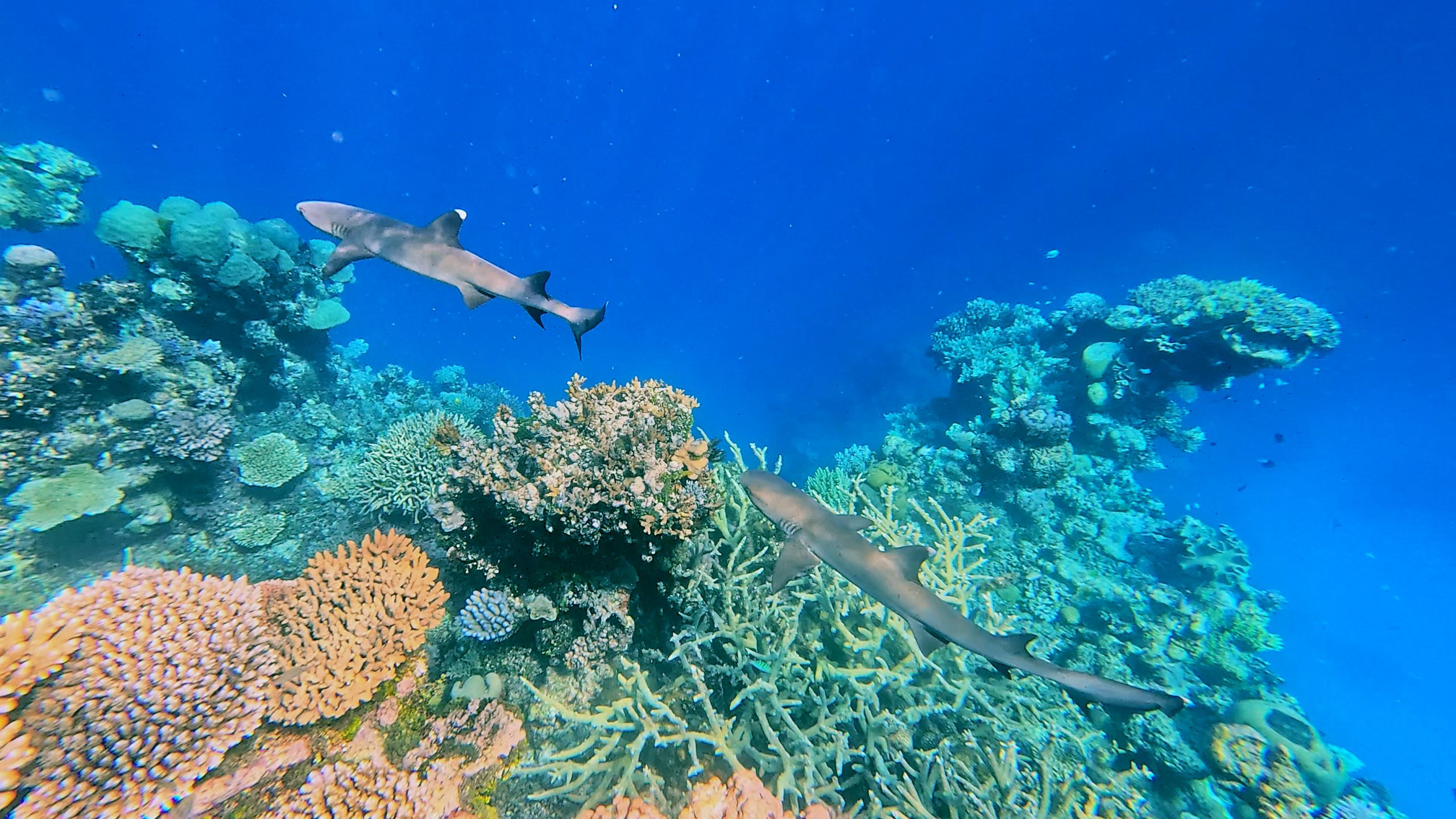
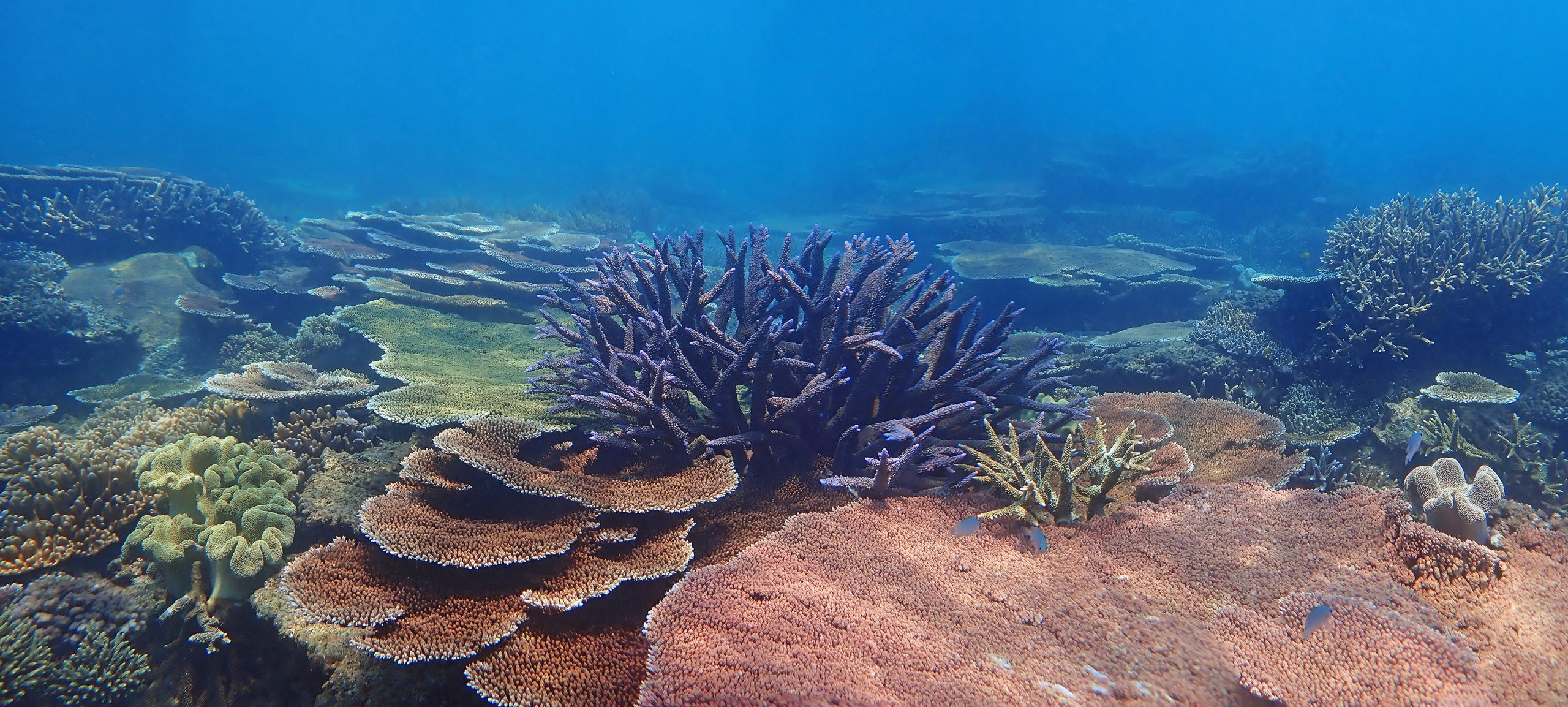
The final expedition of the program saw the Coral Sea Foundation team and our Indigenous trainees travel more than 120 nautical miles in four days across Wulgurukaba and Manbarra sea country, working in collaboration with ranger mentors from the Sea Women Great Barrier Reef program. Taking advantage of a window of favourable pre-summer weather, we were able to visit sites right across the continental shelf – from inshore island fringing reefs through to the outer reefs of the Great Barrier Reef. What we found exceeded all expectations: vibrant, healthy coral communities, water clarity in excess of 25 metres, and flourishing marine life including reef sharks, giant clams, hard and soft corals, turtles, dolphins, and hundreds of species of reef fishes.
Over the course of the voyage we surveyed eight sites and collected more than 2,400 geotagged monitoring images, which will be uploaded to our ReefCloud.Ai project for analysis and inclusion in broader GBR reef health assessments. Our trainees repeatedly commented that this was the best trip on country they had ever experienced, and all of us came away with a deeper appreciation of the cultural and biological importance, diversity, and sheer beauty of the marine ecosystems along the North Queensland coast.
We extend our sincere thanks to the Captain and crew of MV Kalinda for their professionalism and seamanship, to the Great Barrier Reef Foundation and their Helping Country grant program, and to our generous donors to the Sea Women Great Barrier Reef program for making this work possible: Sarah & Sebastian, Big Blue Ocean, The Wright Burt Foundation, and the Jock Clough Marine Foundation.
New Training Program at Lizard Island Research Station
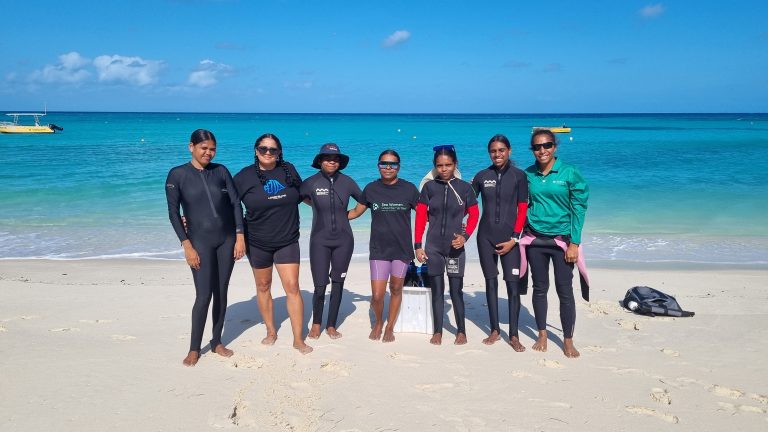
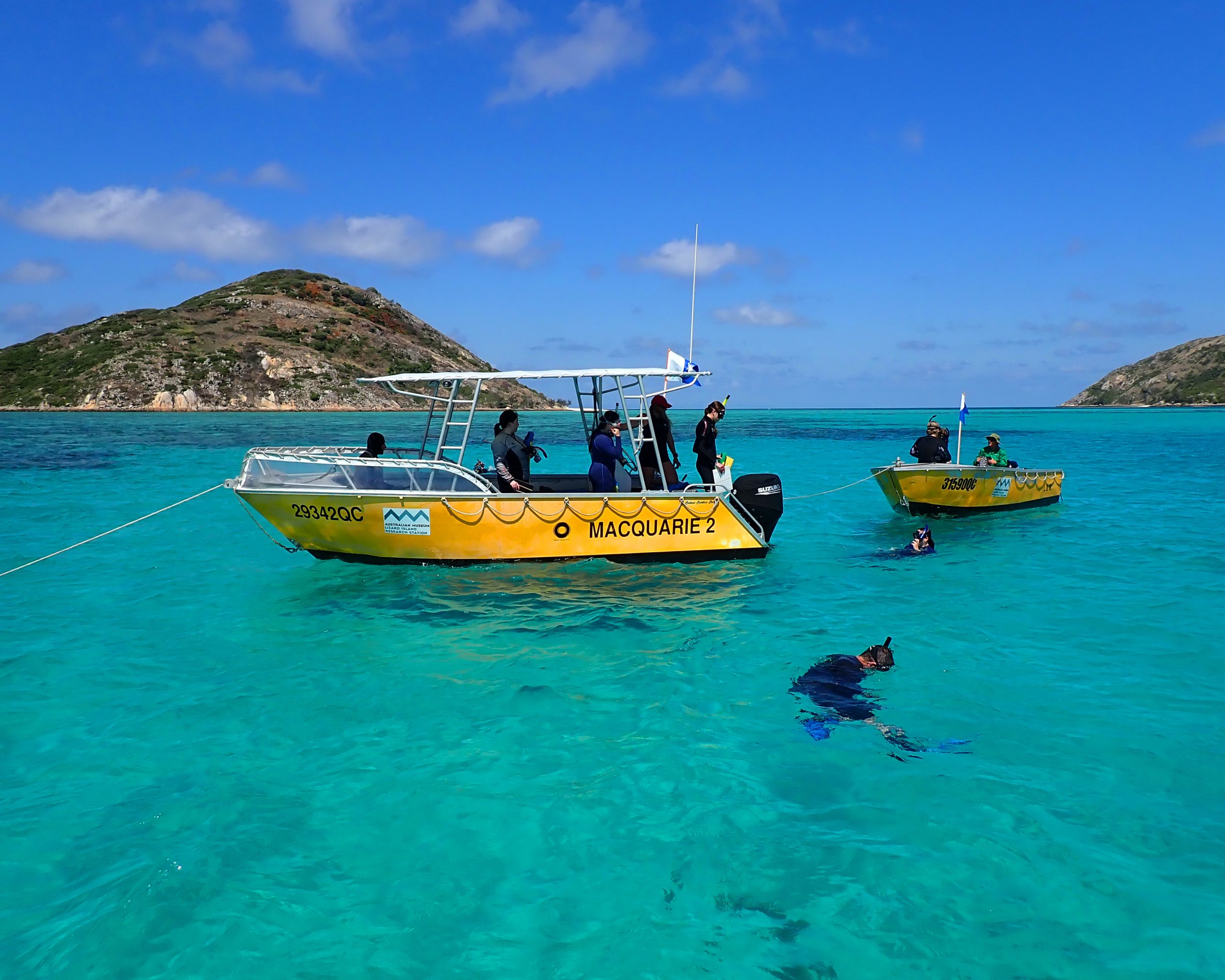
The Sea Women Great Barrier Reef training program delivered its 6th major training expedition since the program began in 2023, and the first program exclusively for women from the Dingaal Traditional Owner group on Cape York Peninsula.
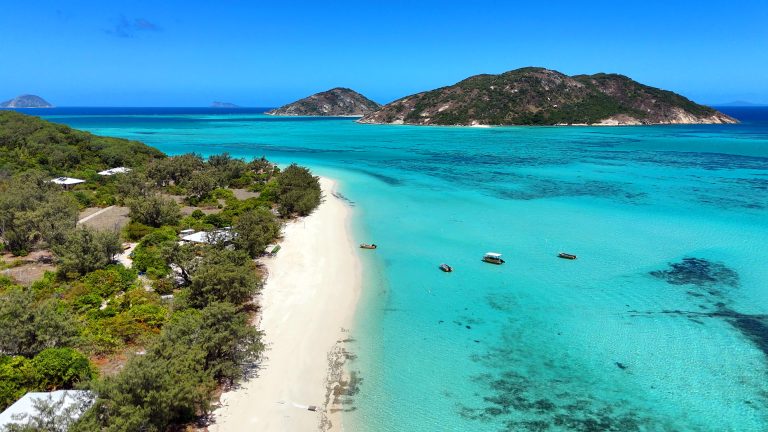
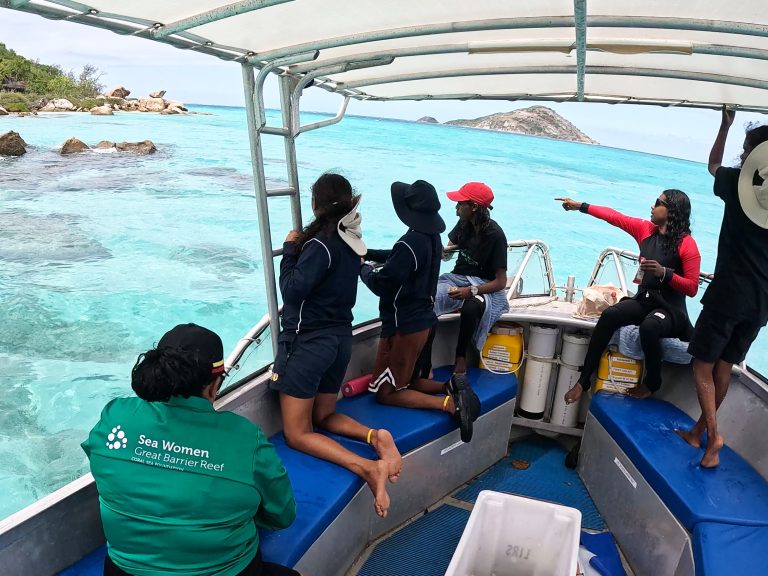
This program was based at the Lizard Island Research Station and ran over 7 days on Dingaal sea-country surrounding Jiigurru, Lizard Island and adjacent mid-shelf platform reefs. The group of 5 Dingaal women was joined by Ranger mentor Natalie Friday and Sea Women of Melanesia Director Naomi Longa, and Coral Sea Foundation Director Dr Andy Lewis.
Jiigurru is an extremely important cultural site for the Dingaal people, and the aim of this program was to connect Dingaal women with their traditional country in the land and seas around the island, and enhance their marine science and conservation skills so they can more effectively contribute to monitoring and protecting sea country. The ladies developed their snorkelling skills and were able to see first-hand the differences in reef structure between different sites around the island, as well as the high marine biodiversity of the northern GBR. Even more important was the opportunity to view significant Dingaal cultural sites, as favorable weather allowed us to complete a full circumnavigation of the island.
The experience and learnings from this expedition will help us continue to develop the Sea Women GBR program and we are already planning the next round of activities in 2026.
We respectfully acknowledge Dingaal Traditional Owner Thudu Thompson for delivering an Acknowledgment of Country and for generously sharing her knowledge of the language and traditional and ongoing cultural connections to Jiigurru held by the Dingaal people. We also wish to thank our supporting partners in the Sea Women GBR program who made this program possible: Big Blue Ocean, Sarah & Sebastian, and the Wright Burt Foundation.

Humpback whales can be found during the winter months in the waters around Yunbenun, Magnetic Island, where they rest and give birth to calves.
This year we were fortunate to observe some courtship behavior called a heat run, where groups of male whales chase a fertile female in a test of strength and endurance. The animals charged along the edges of the Nelly Bay fringing reef for more than 20 minutes, and we captured this footage of the event from the drone.
Welcoming two new Directors to the Coral Sea Foundation Board
We are pleased to announce that our members Lily Donnelly and Kristin Keane were elected to Director positions with the Coral Sea Foundation at our 2025 Annual General Meeting in late October.
Our not-for-profit constitution requires an annual opportunity for the members to step into the Director roles within the organisation through a democratic election process, and it is fantastic to see the increasing depth of capability within our management Board.
We look forward to bringing the expertise and input of Lily and Kristin into the expanding capacity of the Coral Sea Foundation’s marine conservation operations, and we thank outgoing Directors Cristiana Damiano and Angela Pennefather for their multi-year service in the Director roles. We retain their input on our advisory board.

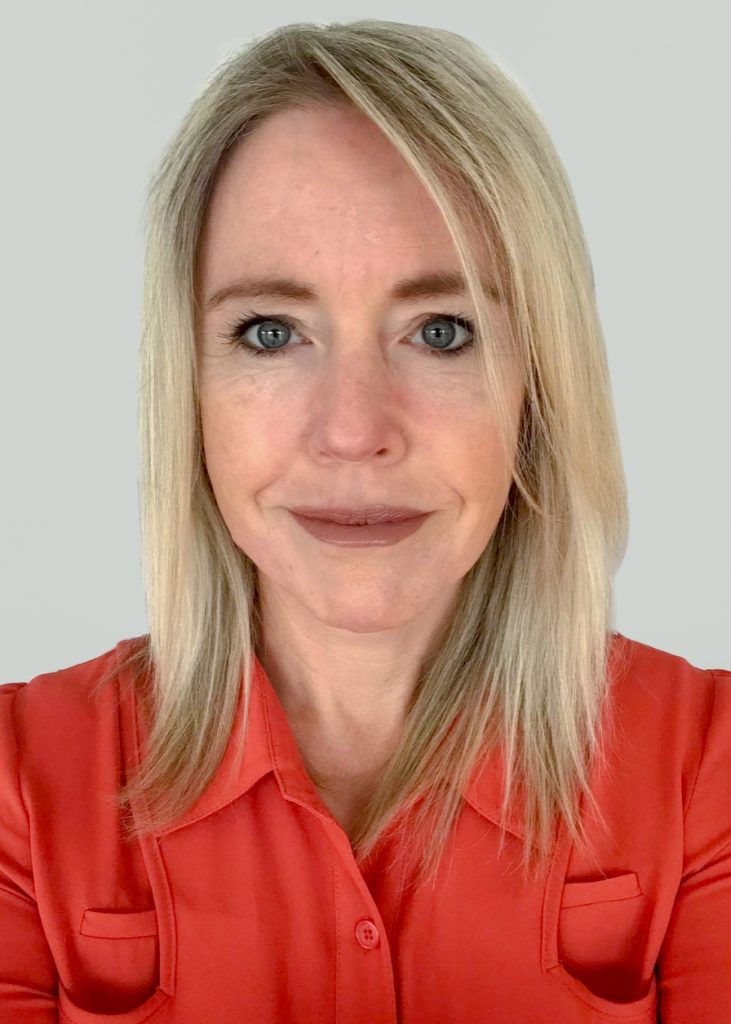
Lily Donnelly is a marine scientist and wildlife geneticist based on Magnetic Island in North Queensland. She holds a Bachelor of Animal and Veterinary Bioscience, a Master’s degree in Marine Science, and is currently completing a PhD in Wildlife Genomics.
Her work and volunteer experience span a range of conservation initiatives across Australia, India, and East Africa, including empowering coastal communities in Kovalam, India, to establish a local marine conservation centre, and leading marine research and education programs in Mafia Island, Tanzania, to promote sustainable fishing, tourism, and conservation practices.
Currently, Lily coordinates the Magnetic Island Network for Turtles (MINT), working with local volunteers and community partners to protect and rehabilitate sea turtles and promote marine stewardship across the island.
Kristin is an experienced director and governance advisor with more than 25 years of professional experience as a marine ecologist in the Great Barrier Reef and Pacific regions.
The CEO and Co-Founder of Environment Pacific, her project portfolio focuses on biodiversity conservation and protected areas management, food security, livelihoods, and climate resilience.
Kristin is an advocate of community-led initiatives and mentoring programs that build local capacity to sustain, protect, and manage viable marine ecosystems for current and future generations. She brings a collaborative and pragmatic approach to connect science, effective policy, and local knowledge to help communities build resilience in some of the world’s most biodiverse regions.
Lizard Island Coral Reef Study Tour 2025
The 2025 Lizard Island Coral Reef Study Tour is an initiative of the Lizard Island Reef Research Foundation (LIRRF) in collaboration with the Coral Sea Foundation. This year we delivered two week-long programs back-to-back – the first group was composed of science and biology teachers, and the second group was high school students from various schools across NSW.
The study tour, now in its 5th year, provides an immersive reef ecology learning experience for science teachers and students, who stay at the Lizard Island Research Station, a facility of the Australian Museum. The program allows the teachers to deepen their knowledge of coral reef ecosystems to enhance their teaching programs, and provides the students with important insights into marine science that can guide their future study and career choices. We were blessed with fantastic weather for the programs again this year, and were able to access a wide variety of reef sites to complete reef surveys and practical training exercises.
We thank Big Blue Ocean and the Lizard Island Reef Research Foundation for their support of this program. Jiigurru is the traditional sea country of the Dingaal people, and we pay our respects to their elders past, present and emerging.

Coral Sea Foundation Fundraising Platform – Made Simple for Ocean Lovers
Our GoFundRaise platform makes it easy for anyone to support marine conservation work. Whether you’re organizing a birthday fundraiser, hosting a community event, or simply want to rally friends around ocean protection, the platform provides simple tools to make a real difference.
Setting up a campaign takes just a few minutes. Simply choose a Coral Sea Foundation project that matters to you – from coral reef monitoring to our Sea Women training programs – create your page, and share it with your network. Friends and family can contribute directly, and you’ll see exactly how your efforts translate into our marine conservation work.
What makes this approach powerful is the ripple effect. When you fundraise, you’re not just raising money – you’re raising awareness. Your supporters learn about marine conservation issues and often become advocates themselves. We’ve seen birthday parties turn into reef survey funding, workplace challenges support research expeditions, and school projects fund educational programs.
The platform handles all the technical aspects, provides regular updates on project progress, and recognizes your contributions to marine conservation. It’s designed for busy people who want to help but need simple, effective ways to get involved.
Ready to turn your passion for healthy oceans into action? Visit our fundraising platform and discover how easy it is to make a measurable impact on marine conservation.
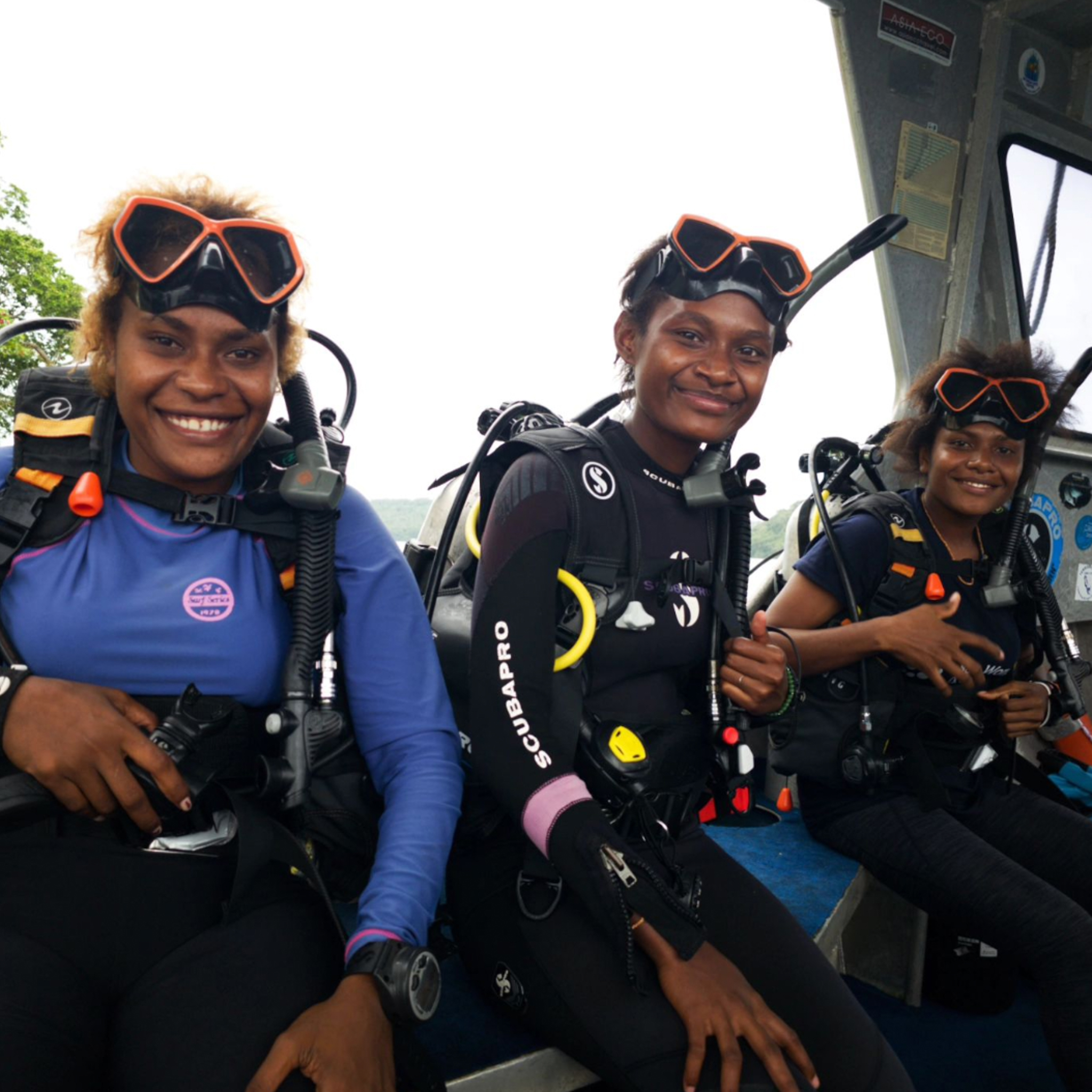
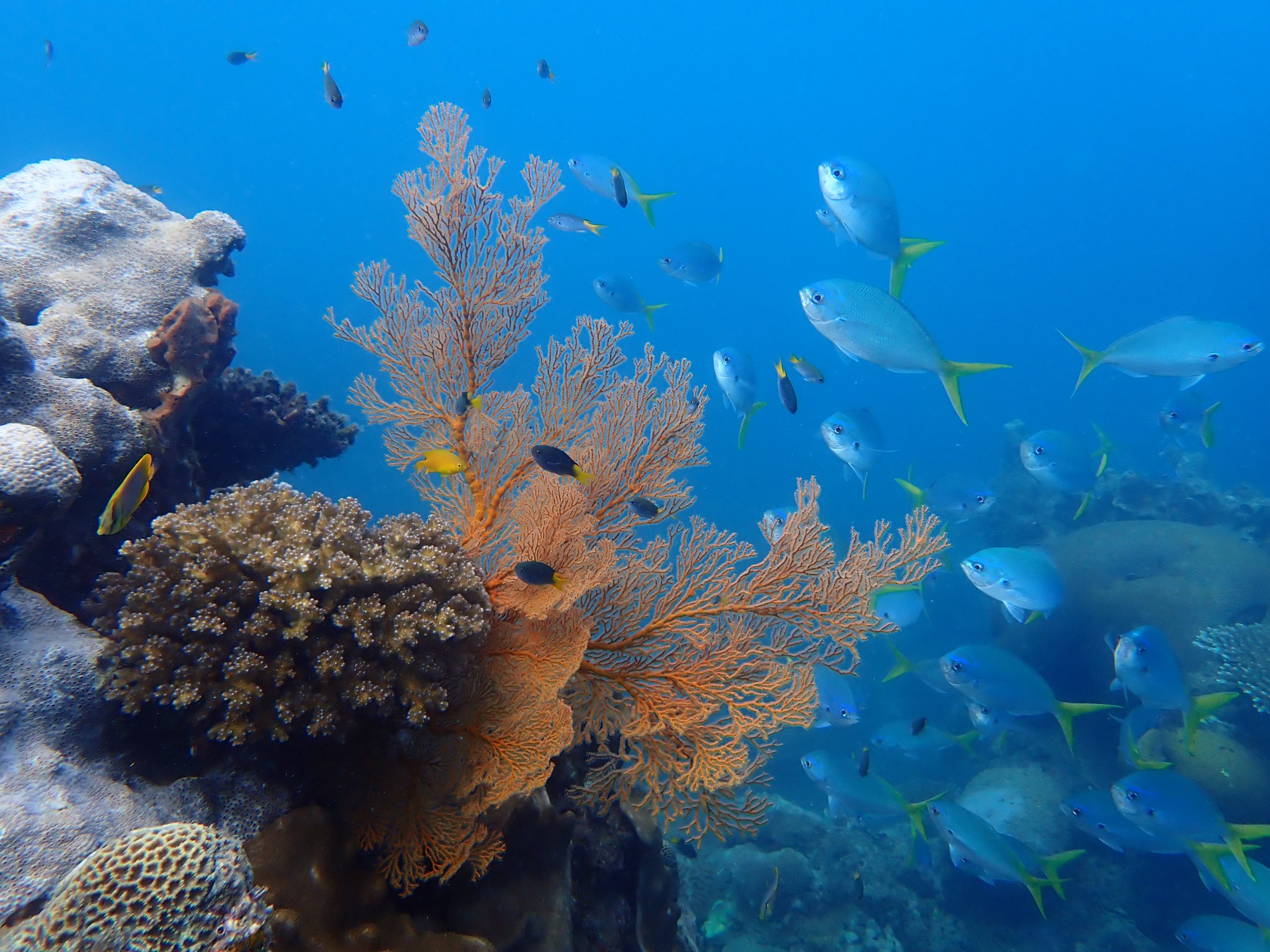
Tax-Deductible Conservation: Your Impact on Marine Ecosystems
Through the Coral Sea Foundation’s Deductible Gift Recipient (DGR-1) status, your tax-deductible contributions directly fund marine research, community conservation programs, and Indigenous training programs across the Coral Sea region.
Your support creates measurable results: from research that guides policy decisions to the empowerment of Indigenous women as ocean champions. Together, we’re protecting critical ocean ecosystems and future generations.
Ready to make your mark on marine conservation? A tax-deductible donation ensures your support goes directly to protecting the outstanding reef habitats around the Coral Sea arc.

ReefCloud Volunteer Program – open to join!
The Coral Sea Foundation regularly uploads new survey imagery to our ReefCloud.ai project space, and we would love your help to analyze the imagery and train the AI. We’re actively recruiting volunteers to help analyze survey imagery from multiple Great Barrier Reef locations, with free coral identification training materials provided. You don’t need to be a marine biologist – it’s a great way to improve your coral ID skills and see firsthand the current status of many different reefs on the GBR.
This citizen science approach provides crucial reef condition information to island communities, traditional owners, and management agencies.
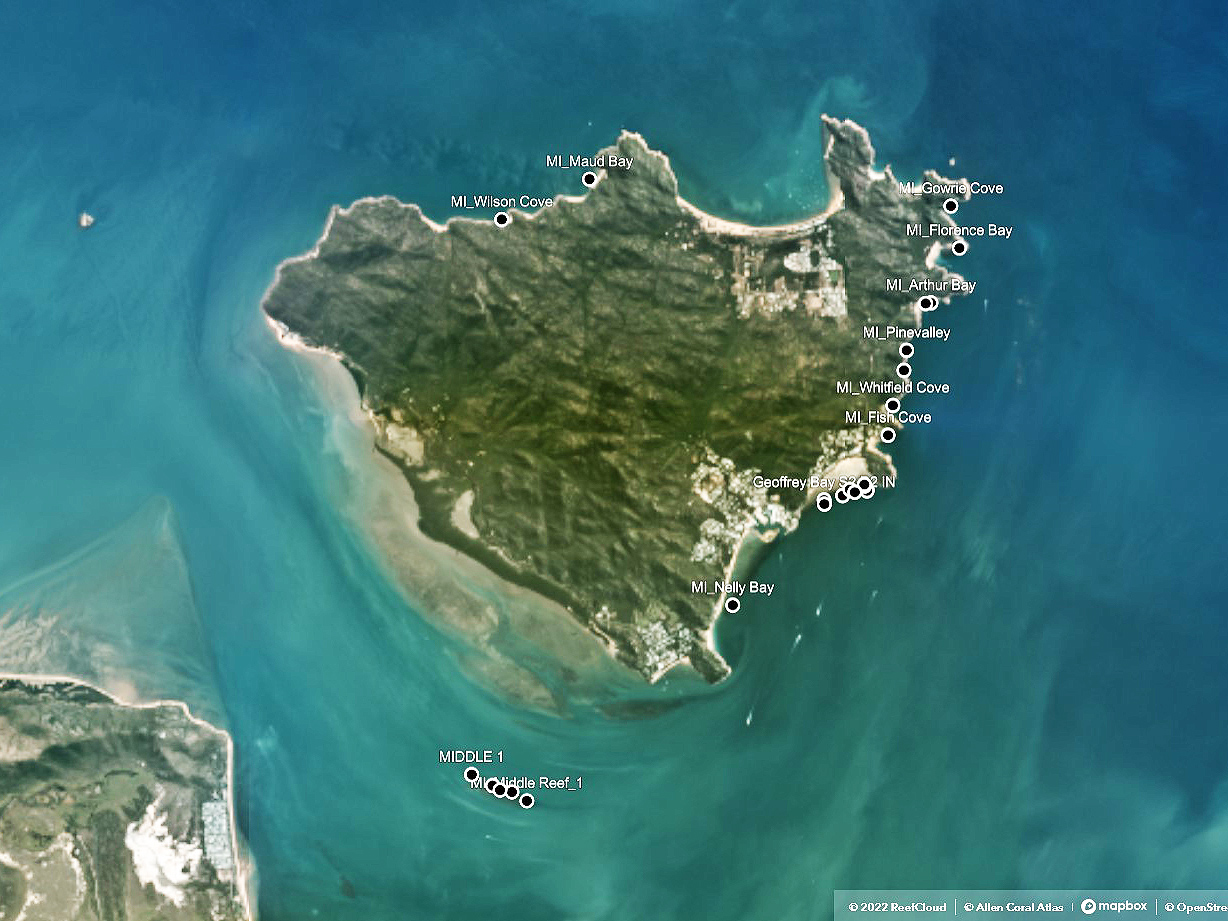
Using GPS and geotagging technology, we can easily relocate and re-photograph the same reef sites without damaging them. As part of our Magnetic Island Reef Monitoring Project, we’ve mapped 13 sites using distinct natural features like massive corals and rocks as reference points. All data is accessible through the Reefcloud Public Dashboard, making Magnetic Island one of the most monitored reefs on the Great Barrier Reef. As an incentive, we’ll give you a free Coral Sea Foundation t-shirt if you classify more than 100 points for us!
Ready to help? Visit our ReefCloud.ai project space or email [email protected]
Vessel Development Program – Seeking Partners
Traditional Pacific Island navigators understood what modern marine scientists confirm: reaching remote coral reefs requires ocean-going vessels. Our Area of Operations covers many locations only accessible by sea, and the regular trade winds and shallow reef systems favor multi-hull sailing vessels for safety, efficiency, and minimal environmental impact.
Coral Sea Foundation’s Vessel Development Program seeks partners for a two-phase approach. Phase one involves deploying a 15-meter sailing catamaran to demonstrate operational concepts. Phase two commissions and delivers a custom 42-meter expedition vessel designed specifically for maritime conditions around the Coral Sea arc, incorporating more than 35 years of regional maritime experience across our team.
This Large Expedition Vessel, designed by One2Three Naval Architects, would provide year-round, all-weather access to the most remote and critically important conservation sites in the Coral Sea arc and eastern Coral Triangle. Current operations rely on hired vessels, limiting research scope and increasing costs while reducing operational control.
The vessel would directly support our award-winning Sea Women training programs, expand technologically advanced Reef Monitoring for Indigenous traditional owners, deliver vital humanitarian aid, and enable marine science work at previously inaccessible locations. This infrastructure investment multiplies marine conservation impact across our region.
Corporate and philanthropic partners have an opportunity to support practical, science-based marine conservation through our Vessel Development Program, providing a lasting contribution to regional marine research capacity and conservation outcomes.
Contact us to explore partnership opportunities for the Vessel Development Program.


Aligning with the Coral Sea Foundation means more than just supporting a sustainable future for our oceans; it means being a crucial advocate for a transformative change in the way we approach marine conservation. Together we can achieve our goals and steer toward a brighter, more sustainable future for our tropical seas and the people that depend on them.

Thank you!
The Coral Sea Foundation team encourages you to explore the different sections of our website to learn more about our initiatives and actively engage in our conservation efforts. Please reach out to us with any questions or inquiries. We look forward to hearing from you!